Table of contents
Where is San Pedro de Atacama?
San Pedro de Atacama is located in northern Chile, in the Antofagasta Region, at an altitude of about 2.400 metres.
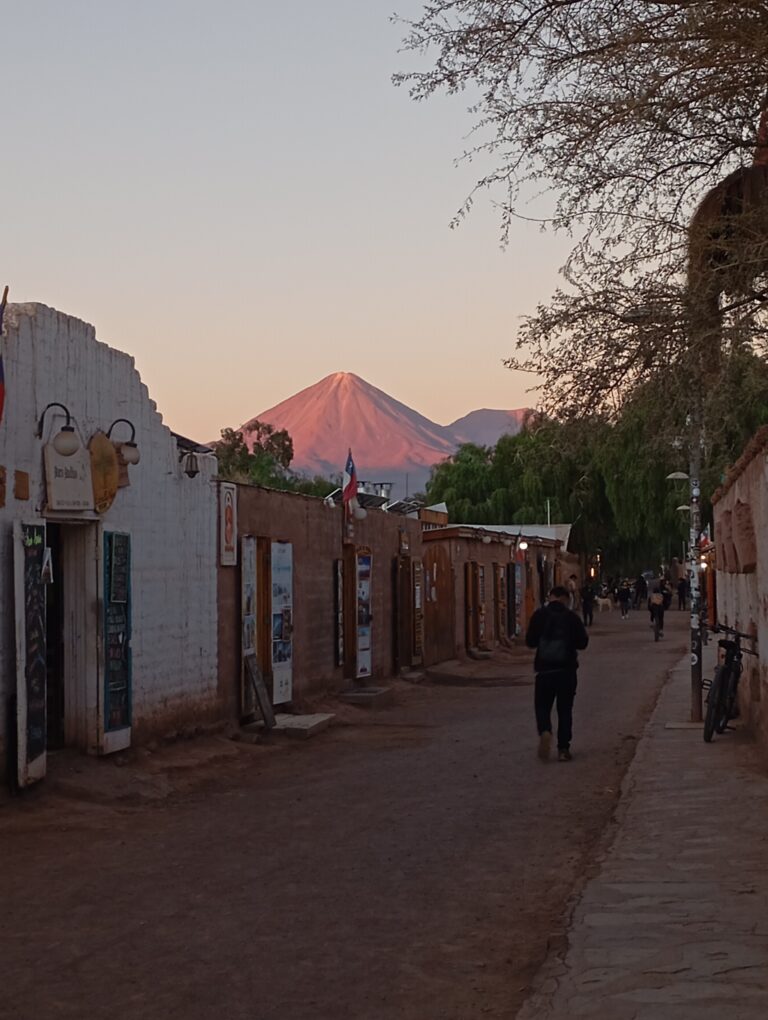
Despite its small size (with just over 5.000 inhabitants), the village is now the main gateway to the northern Atacama Desert and the many natural landscapes that surround it.
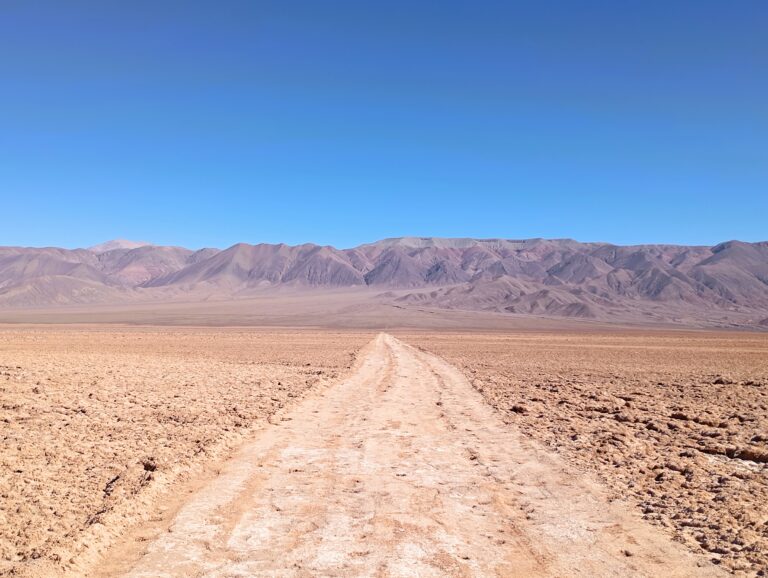
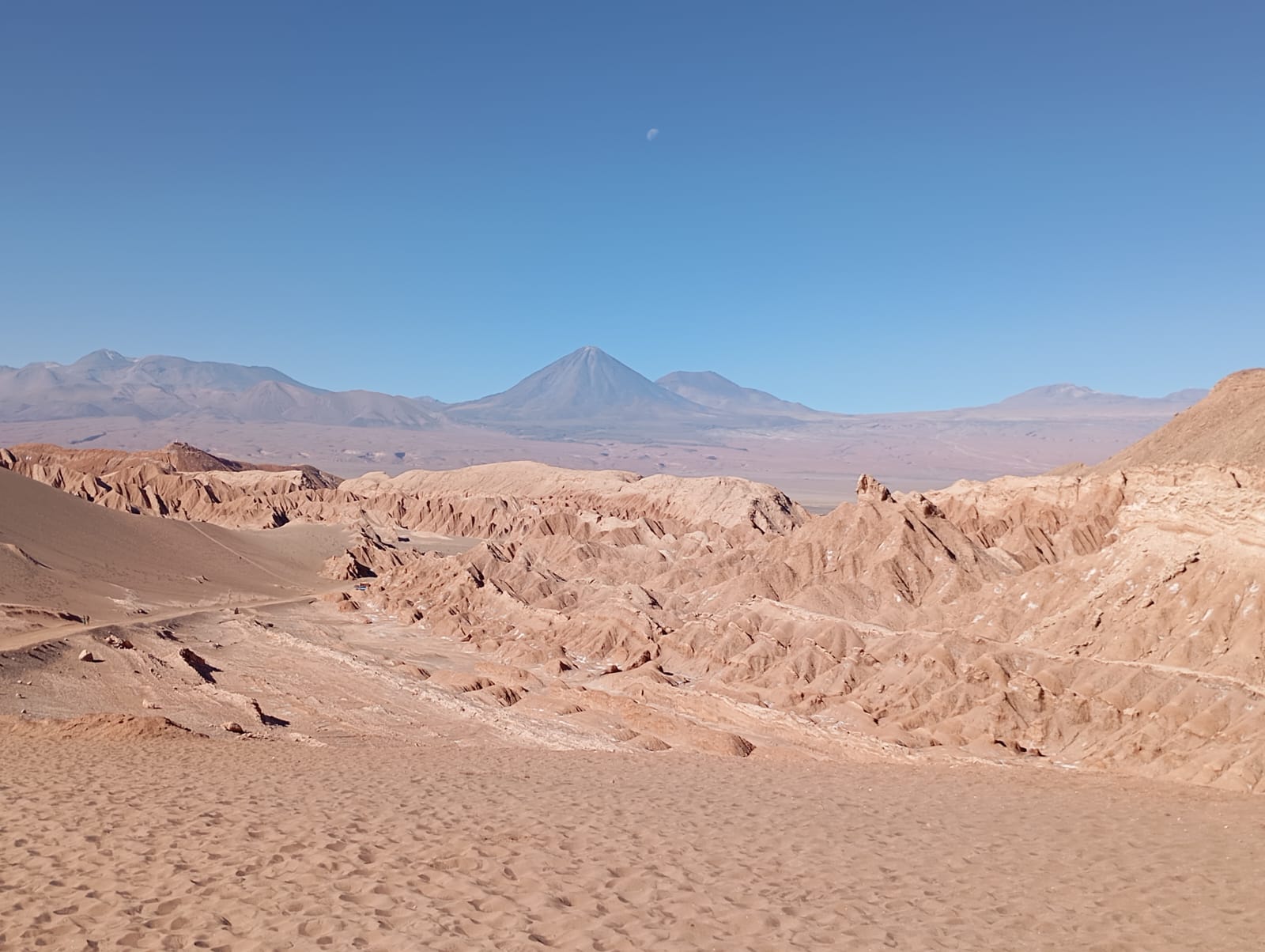
The Atacama Desert stretches for more than 1.600 kilometres across northern Chile and is considered one of the driest places on Earth. Volcanoes, mountain ranges, high-altitude lagoons and vast salt flats shape a landscape defined by extreme environmental conditions.
The region's unique geography and geology are what make this landscape so remarkable. The entire area is the result of millions of years of tectonic activity, volcanism and erosion, which together have shaped one of South America's most extraordinary environments.
⟶ If you want to learn more about the natural context of the region, you can find the dedicated guide to the geology and formation of the Atacama Desert.
What kind of experience can you expect?
Exploring the area around San Pedro de Atacama means travelling through an extreme environment, where landscapes, altitude and temperatures can change dramatically within just a few kilometres. Even within a single day, you may go from the dry heat of the desert to the intense cold of the Andean highlands.
More than a conventional trip, Atacama is an experience deeply shaped by the rhythms of nature and the conditions of the land itself. Long distances, silence, high altitude, and excursions that begin before sunrise or after sunset naturally influence the pace of each day. It is precisely this combination of isolation, tranquillity and diverse landscapes that makes the region so unique.
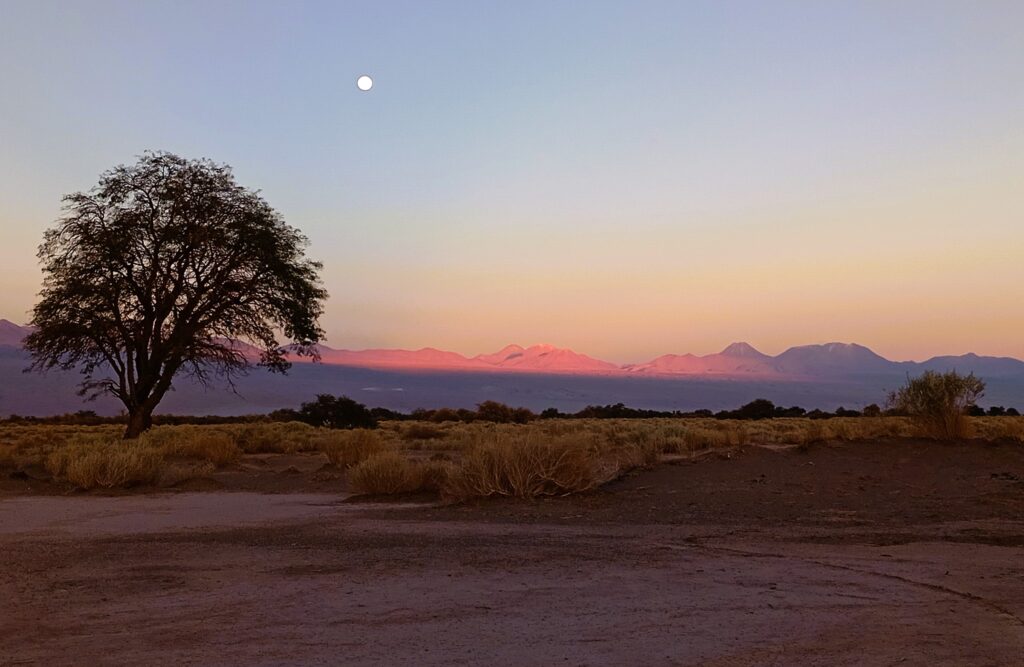
The light here is intense, the air exceptionally dry, and the skies remain clear for much of the year. According to a widely shared local belief, these natural conditions make San Pedro a particularly “energetic” place, one that can have a profound impact on those who spend time there. It is no coincidence that many locals affectionately refer to it as “San Pedro de Atrapama”: a play on words suggesting that, once the desert welcomes you, it somehow finds a way to keep you there. For many travellers, Atacama becomes far more than just another stop on their journey.
How to get to San Pedro de Atacama
The main hub for reaching San Pedro de Atacama is Calama, the closest city, located about 1 hour and 30 minutes away by road. The airport is located here, and all overland connections from other cities in Chile also pass through Calama.
Direct connections to San Pedro de Atacama are instead available from Bolivia and northern Argentina. From Uyuni, it is possible to reach San Pedro either through the 3-day Salar de Uyuni tours, which cross the border at Hito Cajón, or by public buses that reach San Pedro via the Ollagüe border crossing and Calama. From northern Argentina, particularly from Salta, Jujuy or Purmamarca, buses travel directly to San Pedro, crossing the Andes through the Jama border crossing.
Once in Calama, there are several ways to reach San Pedro de Atacama depending on where you arrive.
From the airport, shared and private transfers operate directly to hotels in San Pedro de Atacama. Alternatively, you can rent a car at the airport, especially if you prefer to explore the region independently.
If you arrive in Calama by bus, keep in mind that there is no single central bus terminal. Buses to San Pedro depart from the individual stations operated by each company throughout the city, so it’s important to check your departure point in advance.
To get from the airport to the city centre or to the bus stations, taking a taxi is the most convenient option. Walking is also possible, but it takes at least 30 minutes, so the best choice depends on your luggage and comfort level. By taxi, the journey takes around 10 minutes.
Practical information
Estimated costs
• Shared airport transfer → San Pedro: approximately 15.000–20.000 CLP
• Shared San Pedro → airport transfer: approximately 18.000–23.000 CLP
(Return trip purchased together: approximately 30.000–38.000 CLP)
• Private transfer / taxi airport → San Pedro: from 60.000 CLP
• Private transfer / taxi San Pedro → airport: from 80.000 CLP
• Bus Calama ↔ San Pedro: approximately 7.000 CLP
• Taxi airport ↔ Calama city centre: approximately 10.000 CLP
Important note
After 9:00–10:00 PM, shared transfers and buses are no longer available, so in case of a late arrival, the only options are private transfers or taxis. For this reason, it is advisable to plan your arrival before 8:00 PM if you want to have more transport options available.
⟶ If you want to learn more about transport options to and from Calama, including companies, schedules and practical tips, you can find a dedicated guide to getting to San Pedro de Atacama.
When to visit: climate and seasons
San Pedro de Atacama can be visited all year round, but the climate and environmental conditions vary significantly depending on the season and the areas you plan to explore.
The first thing I'd like to point out is that, although San Pedro de Atacama is often associated with the idea of a place where it never rains, it actually has a rainy season. The driest part of the planet is located in the central Atacama Desert.
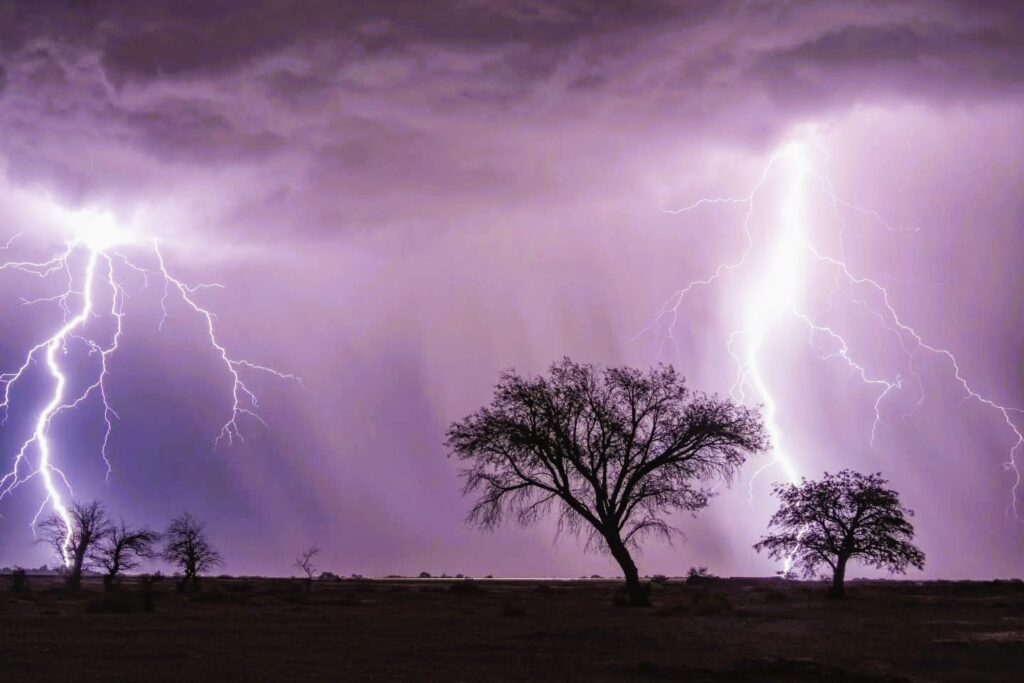
San Pedro, on the other hand, lies in the eastern part of the desert, on the northern edge of the Salar de Atacama. During the austral summer, moisture-laden clouds from the Amazon are able to cross the Andes, bringing rain and thunderstorms. This usually occurs between late January and early March, especially in February, during the climatic phenomenon known as the Altiplanic Winter (or Bolivian Winter).
The intensity of the rainfall varies considerably from year to year: some seasons bring only a few days of rain, while others experience more frequent storms. During this period, some excursions may be temporarily restricted or closed.
For the rest of the year, the weather is generally stable and sunny. Winter, in particular, often brings perfectly clear days, with deep blue skies and almost no clouds for weeks at a time.
When it comes to temperatures, it's important to remember that San Pedro de Atacama sits at around 2.400 metres above sea level, and the temperature difference between day and night is significant throughout the year. Even in winter, however, days are usually warm and sunny, and a light shirt is often enough during the warmest hours. At night, on the other hand, temperatures drop considerably, even in summer.
The biggest seasonal differences are felt between summer and winter: during the summer months, the sun can be extremely strong and intense, while in winter the nights become particularly cold, with temperatures often falling below freezing.
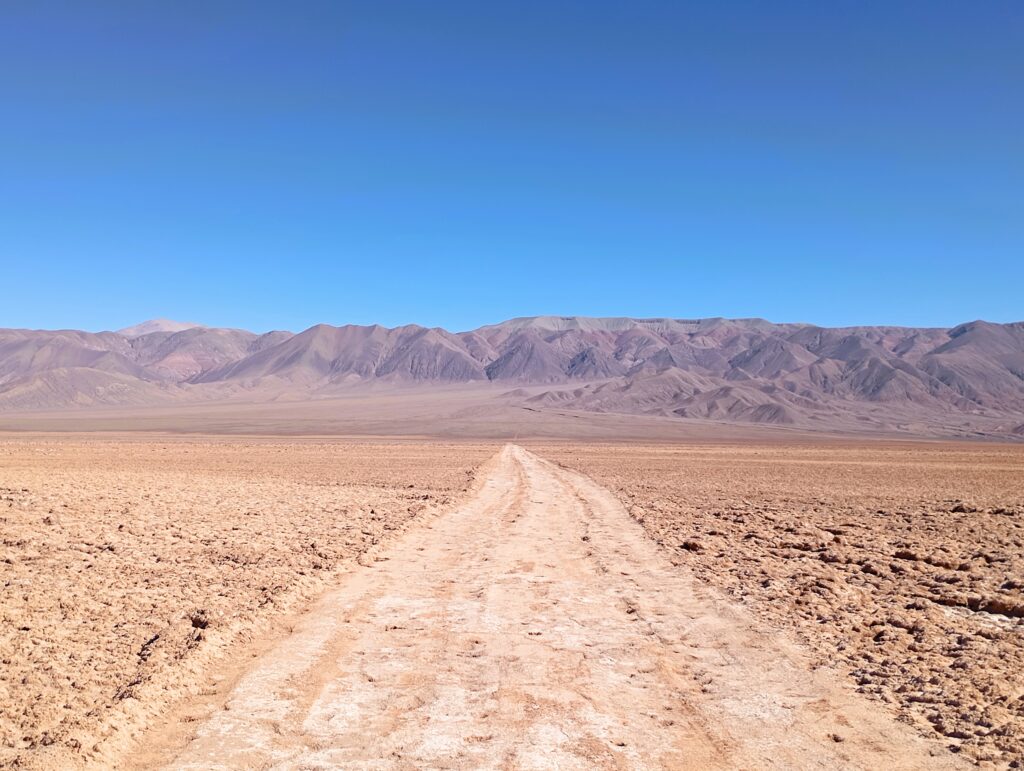
It is important to keep in mind that many of the excursions around San Pedro de Atacama reach much higher elevations, often above 4.000 or 5.000 metres. In these areas, temperatures can be very low at any time of the year. At the Tatio Geysers, for example, located at around 4.400 metres above sea level, tours start before sunrise, and temperatures during the early morning hours can drop to around -5°C even in summer.
For this reason, regardless of the season you choose to travel, it is always advisable to bring both warm clothing for cold temperatures and a swimsuit: during the same day, you may go from freezing temperatures to hot springs and high-altitude lagoons.
Wind is also an element not to be underestimated in the Atacama Desert. On some days, it can be particularly strong and may cause temporary restrictions or closures in areas such as Valle de la Luna or Piedras Rojas. However, these conditions are difficult to predict well in advance and can change quickly.
Altitude and acclimatisation
One of the most important aspects to consider when planning a trip to San Pedro de Atacama, and to the Andean Altiplano in general, is altitude. As mentioned earlier, the village sits at around 2,400 metres above sea level, but many of the surrounding excursions easily exceed 3,000 metres and in some cases reach over 5,000.
Acclimatisation to altitude is highly individual: some people hardly feel any effects, while others may experience more fatigue during the first few days, especially when engaging in physical activity. Headaches, shortness of breath, tiredness and difficulty sleeping are some of the most common symptoms of the so-called mal de puna (altitude sickness).
In general, the best advice is to keep a slow pace, avoiding overly intense activities upon arrival, and to stay well hydrated throughout your stay. In fact, dehydration can make symptoms such as headaches and fatigue worse. The extremely dry desert air causes you to lose fluids very quickly (dry nose during the first few days can be particularly uncomfortable). Dust is also part of everyday life in San Pedro, so expect to find sand almost everywhere.
In case of altitude-related symptoms, it is very common in San Pedro to find natural local remedies. Alongside the well-known coca leaves, people here also use infusions made from rica rica or chachacoma, plants native to the Andean Altiplano traditionally associated with respiratory and digestive wellbeing.
If needed, you can also buy specific medications at local pharmacies or bring them from home after consulting your doctor. If you suffer from high blood pressure or other medical conditions, it is advisable to seek medical advice before travelling, especially considering that some excursions reach very high altitudes within just a few hours.
A trip to Atacama therefore requires a gradual acclimatisation. For this reason, it is recommended to schedule higher-altitude excursions only after at least two or three days after arrival.
Itineraries designed by tour operators and travel designers are also usually planned following a gradual increase in altitude. The same approach is recommended for those who prefer to organise their trip independently.
How many days do you really need?
One of the most common questions when planning a trip is how many days are needed to explore the area. The answer depends greatly on the type of trip you want to do, the pace you prefer, and the excursions you don’t want to miss.
Many travellers tend to underestimate Atacama, thinking that two or three days are enough to see everything. In reality, due to distances, altitude and the rhythm of the excursions, the trip can be more demanding than it initially appears.
Personally, I consider 4 days the minimum to be able to enjoy the main excursions without rushing. Tours such as the Tatio Geysers involve early departures (around 4:30 a.m.), while others like Piedras Rojas can last up to ten hours. In addition, some experiences depend entirely on weather conditions, such as stargazing tours, which may be postponed for several consecutive days in case of cloud cover.
With 5–7 days, the trip becomes much more balanced: it allows you to alternate more intense days with moments of rest, offering greater flexibility in case of fatigue or changing weather conditions.
In San Pedro, it is also worth slowing down, spending a few hours by the pool, renting a bike or simply enjoying the village and the desert atmosphere.
For this reason as well, when planning an itinerary it is important to find a balance between the number of activities, recovery time and acclimatisation to altitude. Packing too many excursions into consecutive days can easily make the trip much more tiring and less enjoyable.
What to do: must-see experiences
San Pedro de Atacama is a destination full of activities and nature-based excursions, offering an incredibly diverse range of landscapes.
To help you get your bearings, in this section you’ll find a selection of what I consider the must-see experiences in the area. These are the excursions that best showcase the region’s variety and that are truly worth including on a first trip.
Among the most iconic experiences is undoubtedly stargazing, which allows you to admire one of the clearest skies on Earth thanks to the unique conditions of the Atacama Desert. And trust me, with no Moon at all (and therefore no light pollution from it), it is a spectacle that is difficult to forget.
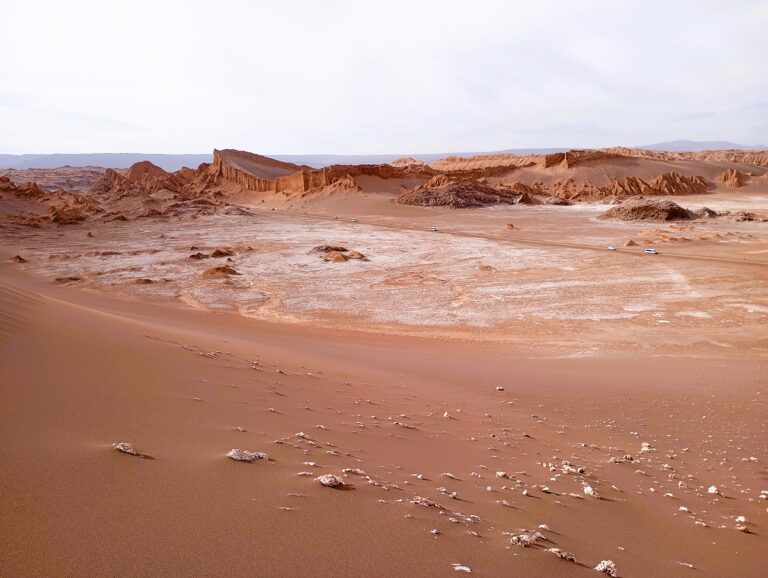
Also not to be missed are the desert landscapes shaped by wind and erosion in the Cordillera de la Sal. These include in particular the tours to Valle de la Luna, Vallecito or Valle de Marte: any choice is a good one, and all of them offer their best experience at sunset, when the colours become intense and reddish.
The salt lagoons where it is possible to swim and float effortlessly are also very unique, such as Laguna Cejar or Baltinache. These lagoons, which are part of the Salar de Atacama, offer a different kind of experience: the water is extremely salty and, for those who have never tried it before, the feeling of floating is truly fun and surprising.
Among the most spectacular excursions are also the Geysers del Tatio, which are part of the highest geothermal field in the world and the third most active globally. It is also one of the few excursions that allows visitors to experience sunrise.
Finally, the Piedras Rojas and Aguas Calientes tour is another unique experience, where the colour contrasts between the red volcanic rocks and the blue lagoon make the landscape almost surreal. It is also a full-day tour that allows you to visit several points of interest along the way, such as Laguna Chaxa, the high-altitude lagoons Miscanti and Miñiques, and the villages of Toconao and Socaire, offering a very complete overview of the region.
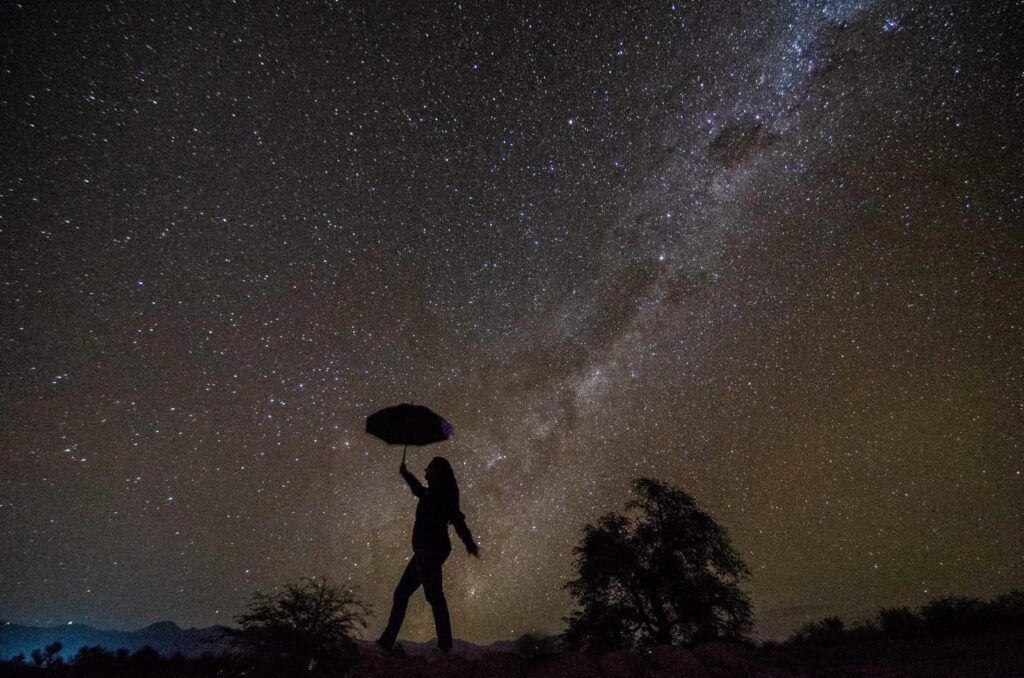
Stargazing tour 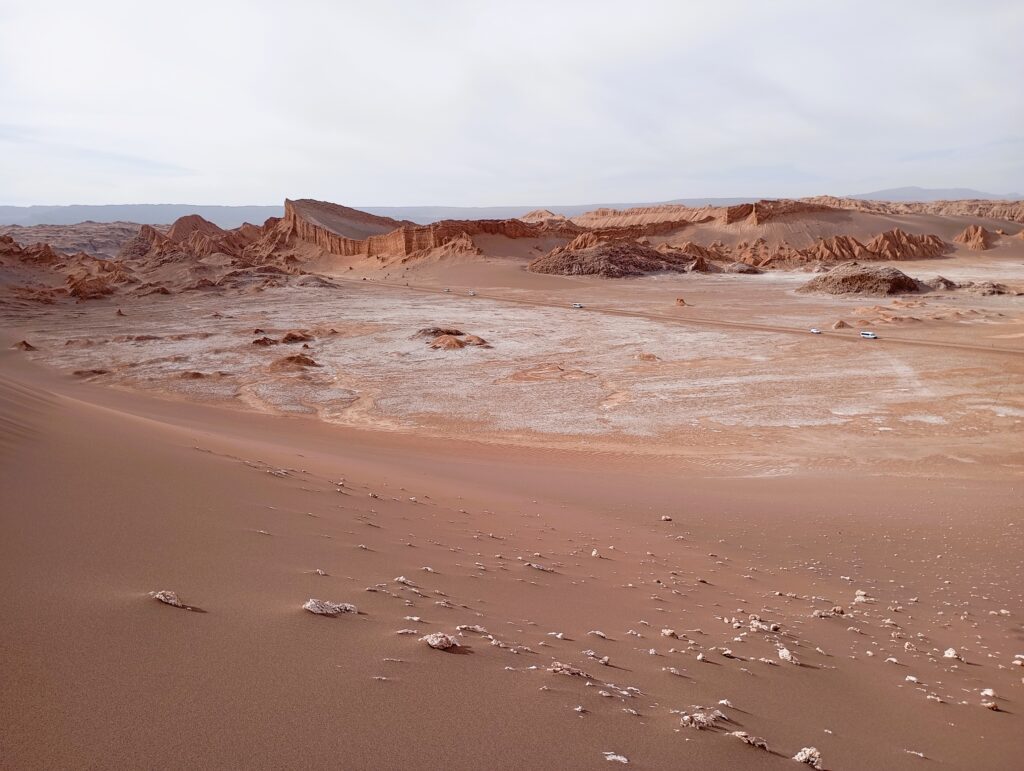
Valle de la Luna 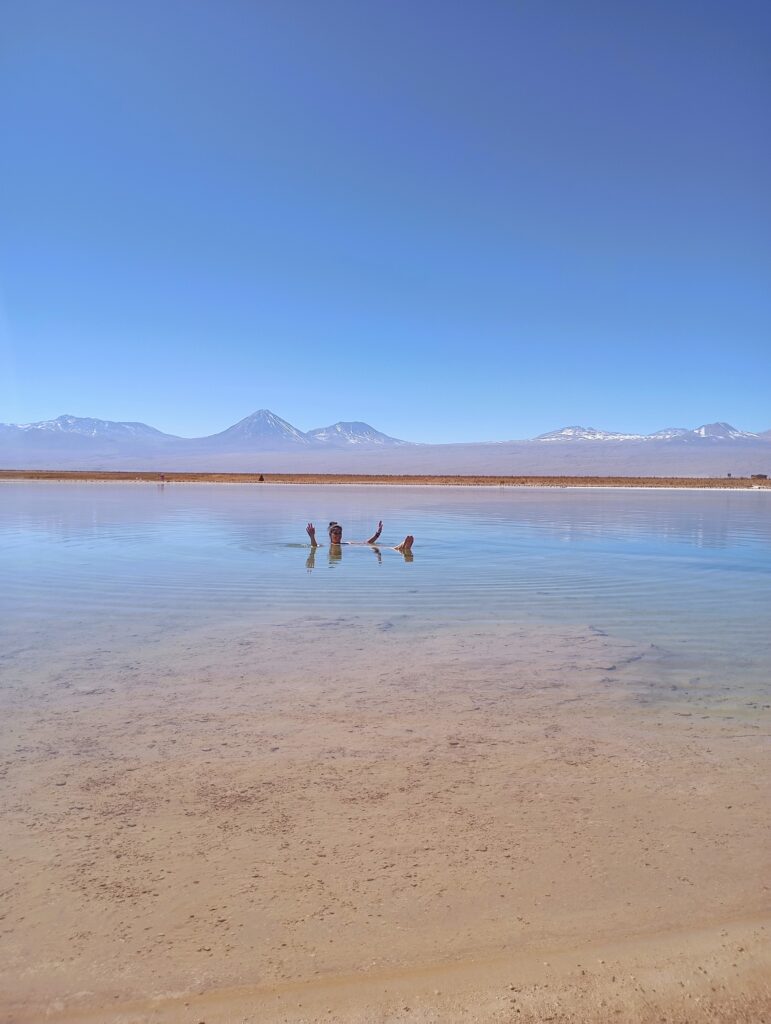
Laguna Cejar 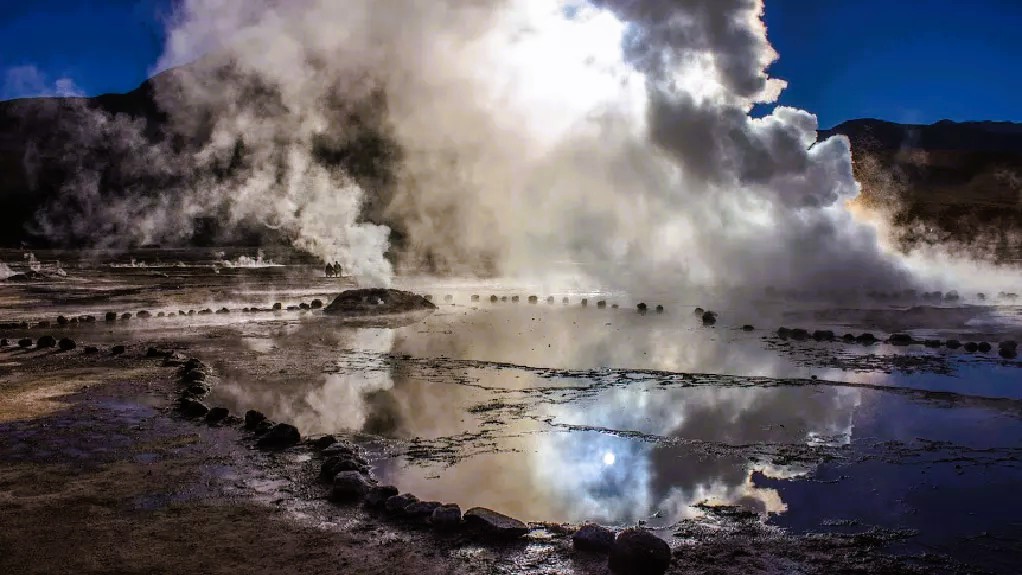
Geyser del Tatio 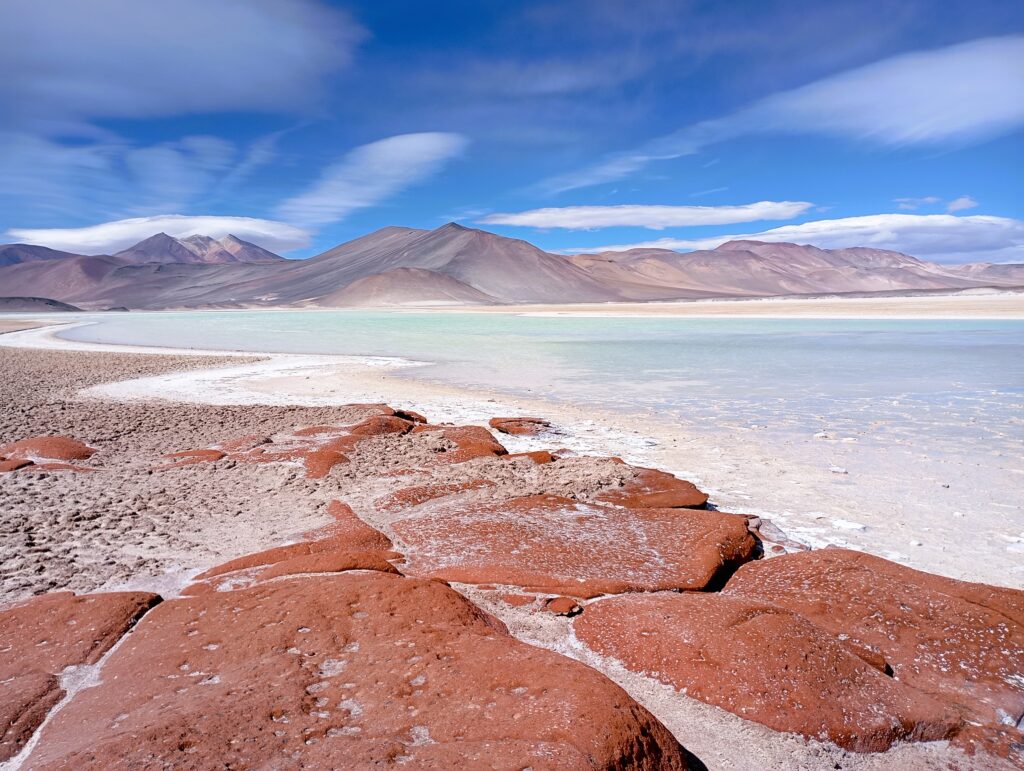
Piedras Rojas
⟶ Here you can find a dedicated guide for each of these experiences, with practical information, timings and tips, as well as many other excursions and activities available in the area.
How to organise your excursions
Most of the attractions and activities around San Pedro de Atacama are located outside the village, often dozens of kilometres away. For this reason, in most cases it is necessary to travel by car, either by joining an organised tour or by renting a vehicle.
There are, however, a few exceptions: places such as Valle de la Luna and Laguna Cejar can also be reached by bicycle, while attractions accessible on foot from the town centre are limited, but not entirely absent.
Organised tours or rental car
Organised excursions are the most simple and common option. Tours usually include transport, a guide and, in many cases, meals. In addition to making it easy to reach remote locations, they allow you to travel without worrying about driving, navigation or logistics, with the added benefit of a guide who provides explanations and insights about the area.
Renting a car, on the other hand, can be a good option for those who prefer to travel independently and have greater flexibility with schedules. It can also be cost-effective for groups of four or more. However, it’s important to take into account the long distances, the unpaved roads in many areas and the high altitude of most destinations.
Finally, from an environmental perspective, joining a shared organised tour, often carrying up to 16 people, helps reduce the number of vehicles travelling daily to the same attractions.
Book in advance or organise everything on arrival?
In San Pedro de Atacama there are dozens of tour agencies, and in most cases it is possible to book excursions directly on site. For this reason, many travellers choose to arrive without a fixed itinerary and organise their activities once they are there.
However, this approach requires time. To compare different options, you need to visit several agencies, request quotes, check what is included in the price and look for reliable reviews. In addition, the agency you book with is not always the one actually operating the tour: if they have no availability, they may resell the service through another agency or operator.
Booking in advance, on the other hand, allows you to arrive with a fully defined itinerary and the certainty of knowing in advance which experiences you will be doing. This can be particularly useful during high season, public holidays, for tours with limited availability, or simply for those who prefer not to spend part of their trip on logistical planning.
It is also worth noting that booking in advance does not necessarily mean paying more. In San Pedro, prices mainly depend on the type of experience and the level of service offered, rather than on when the booking is made. Not all agencies offer the same experience: group sizes, vehicle quality, meals included and overall organisation can vary significantly. For this reason, it is often more useful to choose based on your needs and travel style rather than focusing solely on price comparisons.
In some cases, however, it may still be necessary to adjust your plans once you arrive, for example depending on weather conditions.
Where to stay
In San Pedro de Atacama you can find options for virtually every budget and travel style: from budget hostels to luxury hotels, as well as guesthouses, apartments and desert lodges.
More than the type of accommodation, the most important factor to consider is the location. If you plan to join organised excursions, I recommend choosing a place within around 2 km of the town centre (using Calle Caracoles and Plaza de Armas as reference points). Most agencies do offer pick-up from your accommodation, but only within a limited area. Staying further out may mean having to reach a meeting point on your own, sometimes at very inconvenient times, such as 4:30 a.m. for the Tatio Geysers tour.
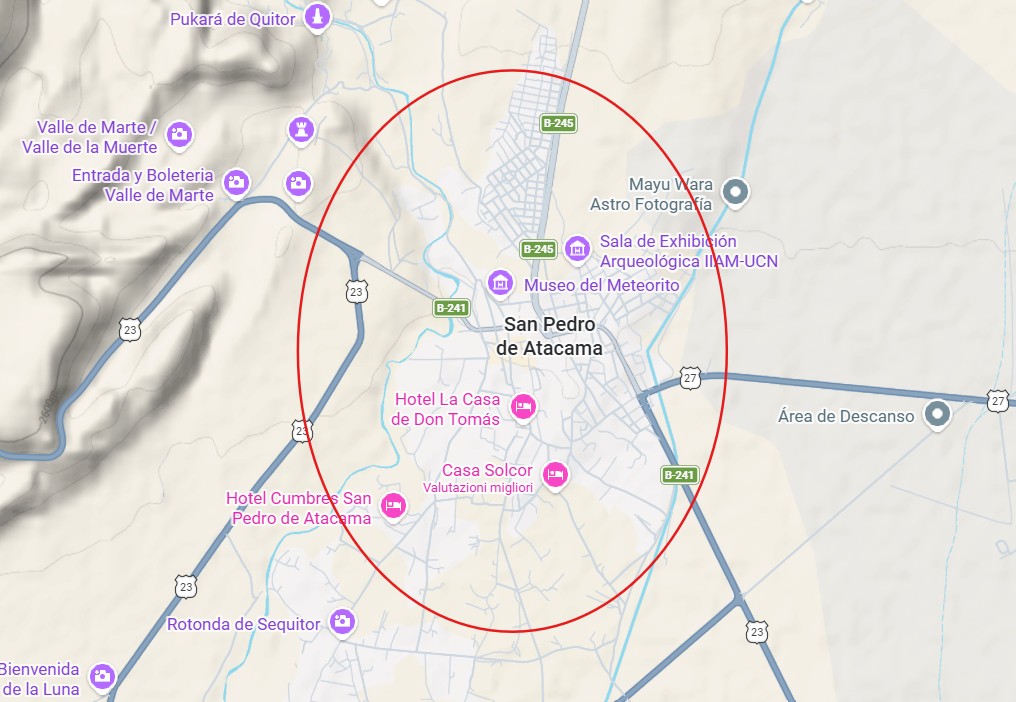
This doesn’t mean that accommodation located in the ayllus or in more peripheral areas should be avoided. These places often offer greater tranquillity, spectacular views and a more immersive desert experience, but it is important to keep in mind that you will need your own transport to get around.
One final aspect worth considering is the presence of a swimming pool. After several days spent on excursions under the sun and in the desert dust, having a place to relax during the hottest hours of the day can be a very welcome bonus.
Costs and travel budget
Compared to other destinations in South America, San Pedro de Atacama, and Chile in general, is not one of the cheapest destinations. However, the final budget can vary greatly depending on your travel style, the type of accommodation you choose and the activities you want to do.
The main expenses are certainly excursions, while for meals and accommodation it is possible to find more budget-friendly options. Lunch menus start at around 7.000 CLP and hostels at around 12.000 CLP per night, while a double room can be found from approximately 30.000 CLP.
Excursions, followed by a possible trip to Salar de Uyuni, represent one of the most significant parts of the budget. Agencies generally offer package deals for those booking multiple activities, with offers starting from around 85.000 CLP for three excursions. However, it is important to remember that a significant part of the final cost is also represented by entrance fees to parks and protected areas. For example, the entrance ticket to the Piedras Rojas area costs around 29.000 CLP per person.
In general, travellers with a limited budget can carefully select which excursions to join, alternating them with activities that can be done independently, such as some bicycle trips. Those with a larger budget, on the other hand, can include more excursions or choose more exclusive experiences.
If you are planning a trip to San Pedro de Atacama, the advice is to decide from the beginning which experiences you consider truly must-see. This will make it much easier to estimate the budget you’ll need and organise the rest of your trip accordingly.
⟶ If you’d like help planning your trip, choosing activities or booking excursions, you can find all the information about my my travel planning services.
San Pedro de Atacama and Salar de Uyuni
Given the geographical proximity between northern Chile and southern Bolivia, combining San Pedro de Atacama and the Salar de Uyuni in a single trip is one of the most popular choices among travellers.
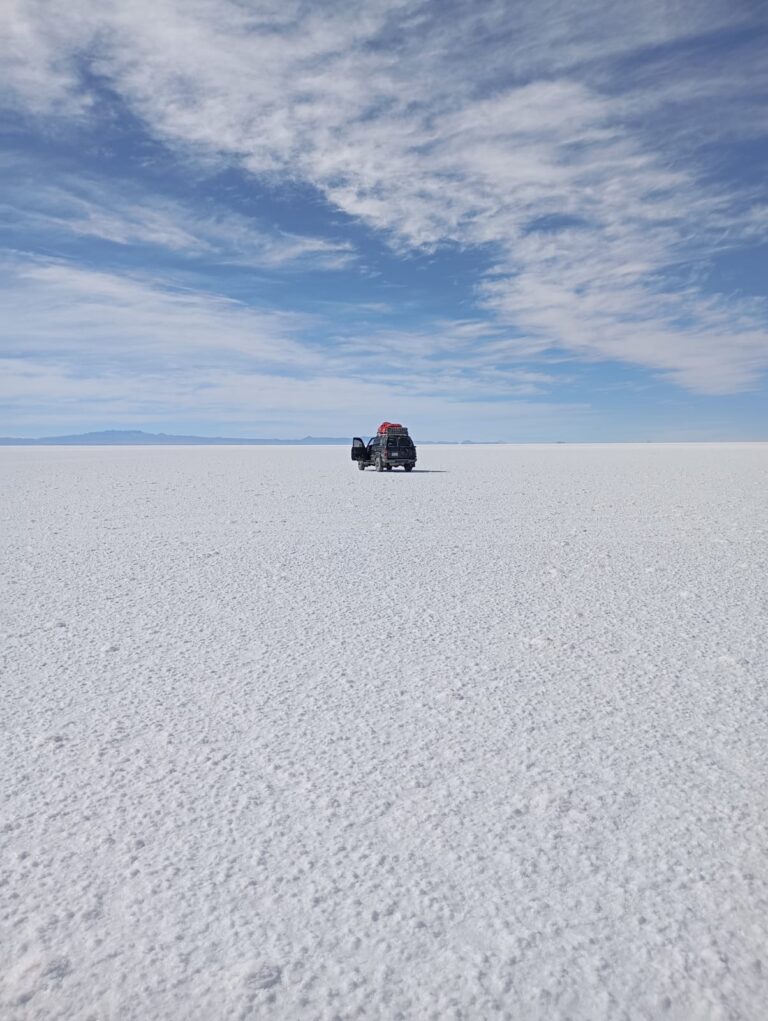
It is possible to visit the Salar de Uyuni from San Pedro de Atacama by joining a 3-day tour that crosses the Bolivian Altiplano all the way to the famous salt flat. Along the way, you will visit colourful lagoons, high-altitude deserts, hot springs, geysers and some of the most spectacular landscapes in the entire Andean region.
Similarly, it is also possible to reach San Pedro de Atacama from Uyuni on a 3-day tour. Although many of the attractions are the same, the routes and organisation of the journey differ in some aspects.
Combining Atacama and Uyuni is something many travellers consider one of the most memorable highlights of an entire trip to South America.
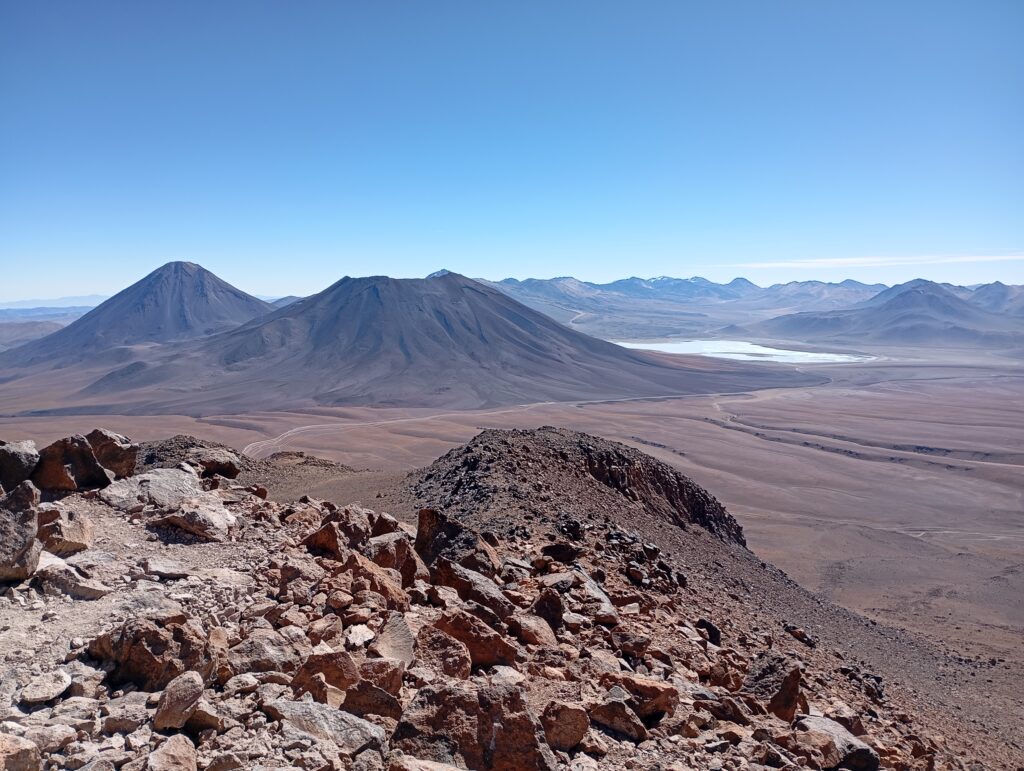
⟶ If you want to explore the available itineraries and receive support in organising your journey between San Pedro de Atacama and the Salar de Uyuni, discover my dedicated service.
Final practical tips
Before travelling to San Pedro de Atacama, here are a few tips to keep in mind:
- Don’t underestimate the altitude: allowing yourself some time to acclimatise will make the trip more enjoyable and help you cope better with high-altitude excursions.
- Always carry water, sunscreen and a hat: the sun in the desert can be extremely intense at any time of year.
- Dress in layers: temperatures can vary significantly throughout the day.
- Consider keeping some cash on hand: in San Pedro it is possible to pay by card in most restaurants, shops and accommodation, but many agencies charge a surcharge for electronic payments.
- If you also plan to visit the Salar de Uyuni, make sure to consider from the very beginning the time needed to include it in your itinerary.
- Don’t fill every day with activities: one of the most beautiful things about San Pedro is also taking the time to enjoy the silence of the desert, the sunsets and the starry sky.
With the right planning, San Pedro de Atacama can be one of the most unforgettable experiences of any trip to South America!