Table of contents
Introduction
San Pedro de Atacama is one of the most spectacular destinations in Chile and South America, offering a surprising variety of excursions. From deserts and high-altitude lagoons to geysers, volcanoes and star-filled skies, there are countless possibilities, and understanding which experiences to choose is not always easy.
In this article, you will find an overview of the classic excursions in San Pedro de Atacama, meaning the most well-known and popular experiences for those visiting the area for the first time. For each one, you will find a brief description and links to dedicated in-depth articles where available.
What I would like to emphasize is that there is no perfect itinerary that works for everyone: the choice of excursions depends on the time available, your budget, personal interests, physical condition and the type of trip you want to experience. For this reason, later in the article you will also find some useful tips to help you navigate the different options available.
In the following sections, you will find the excursions divided by type of environment, providing a clearer overview of the different landscapes that can be explored around San Pedro de Atacama.
→ If you’d like to learn more about how these landscapes formed and the geological and climatic features that have shaped them, you can read thededicated article.
Note
When I refer to excursions organized through an agency in this article, I mean group tours. Almost all experiences can also be arranged privately through an agency, but not all are available as group departures.
Cordillera de la sal
The landscapes of the Cordillera de la Sal are among the most iconic sights in San Pedro de Atacama and, in my opinion, one of the must-see experiences on a first trip to the area.
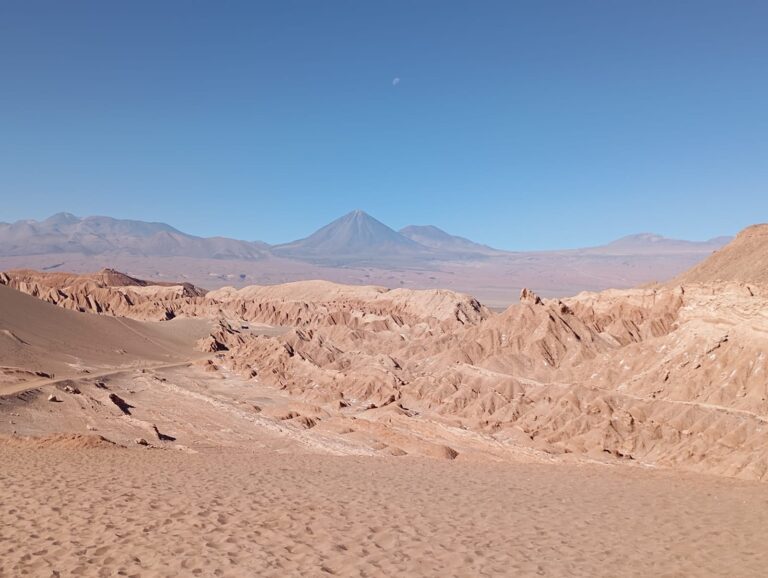
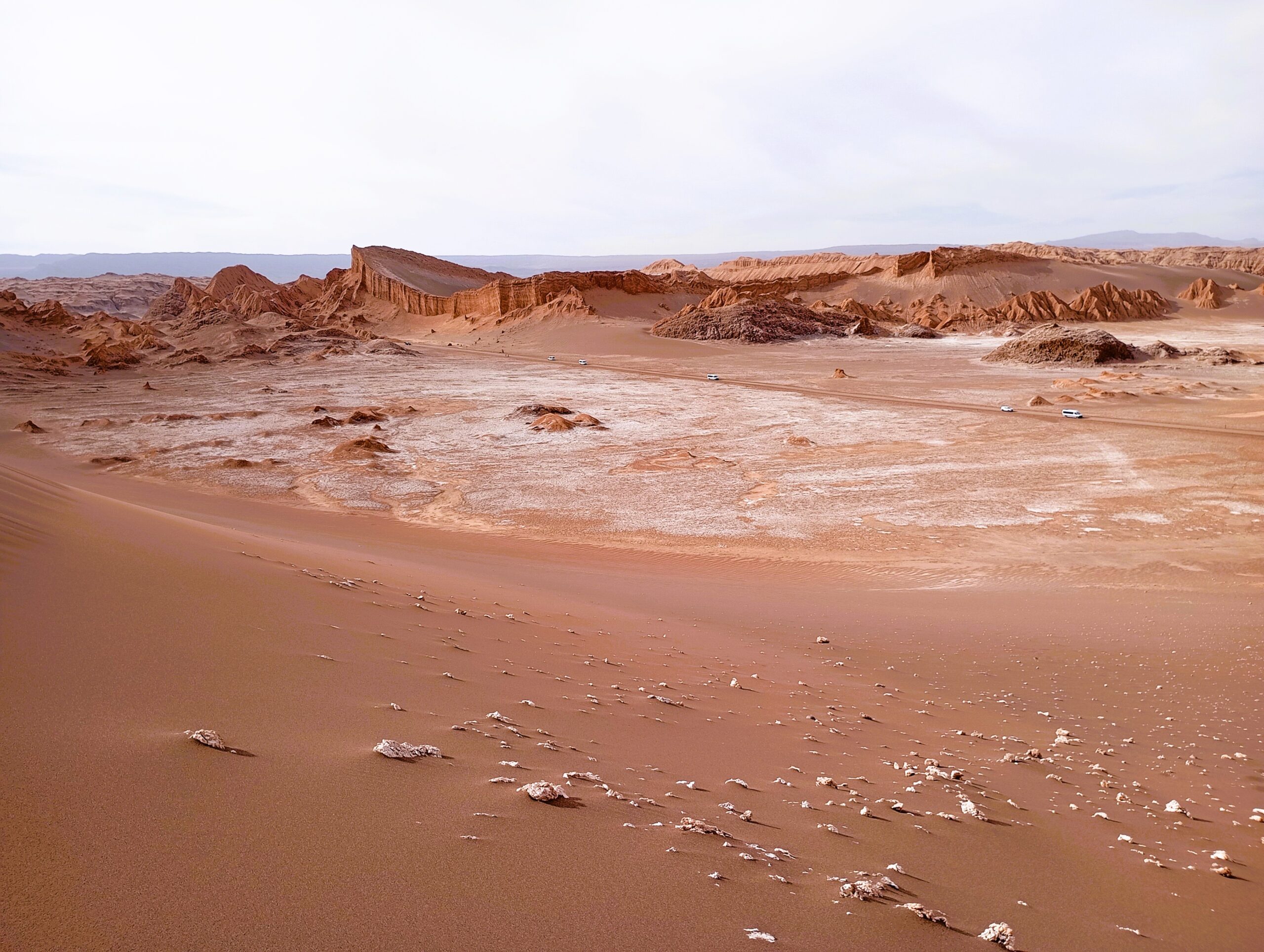
The Cordillera de la Sal is a mountain range made up of sedimentary rocks and salt deposits that were uplifted and deformed more than 20 million years ago. Over time, erosion has shaped these rocks into a landscape of ridges, canyons, dunes and unusual rock formations. These landscapes are at their most spectacular at sunset, when the colours become particularly intense.
The best-known excursions in this mountain range are to Valle de la Luna, Vallecito and Valle de Marte. Although each has its own distinctive features, all three offer the chance to discover striking desert landscapes. In most cases, choosing just one based on your interests and travel style is more than enough.
Valle de la Luna
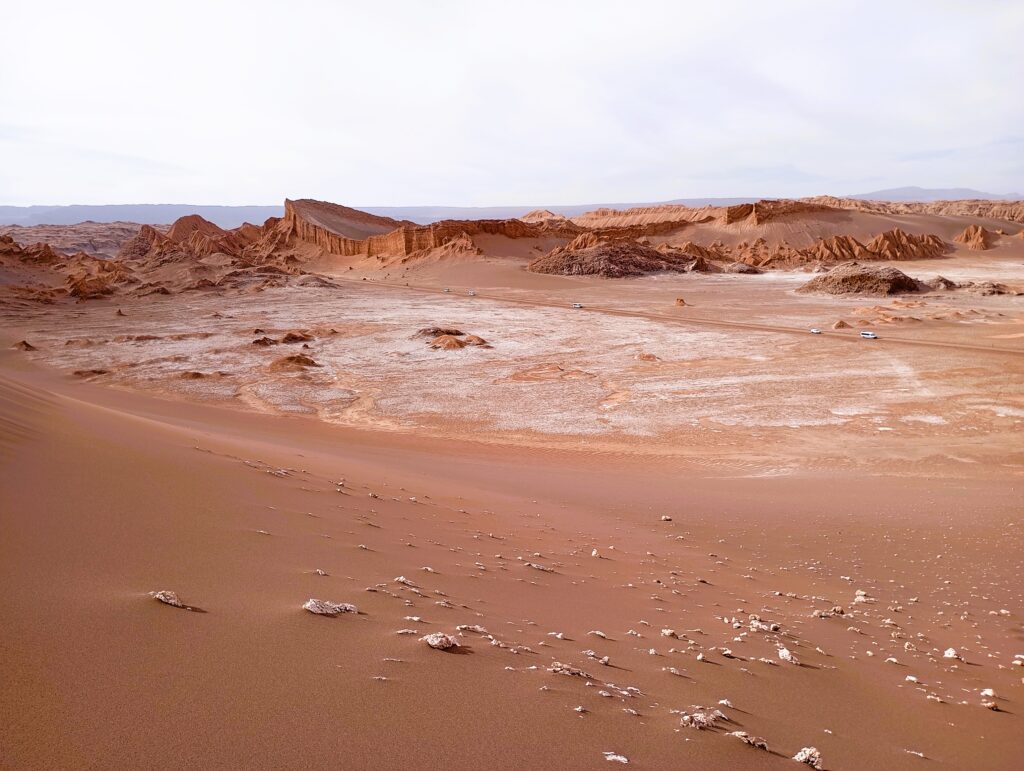
Of the three, Valle de la Luna is by far the most famous and visited excursion. The main points of interest within the park are Duna Mayor, Mina de Sal, Anfiteatro and Las Tres Marías: dunes, old salt mines and rock formations. The itinerary generally also includes the Mirador de Kari viewpoint and ends with sunset.
The excursion can be done with an agency, by car or by bicycle. In the latter case, access hours are different and the route obviously requires more physical effort.
Vallecito
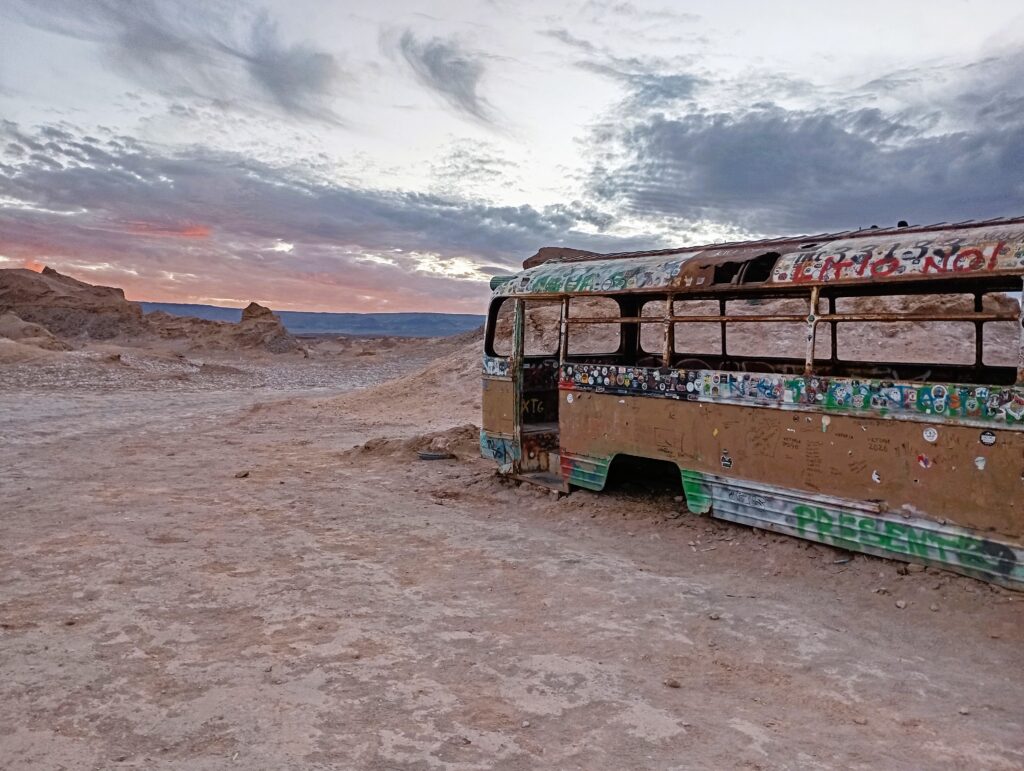
Vallecito is one of the excursions that has become increasingly popular in recent years. In addition to its desert landscapes and distinctive rock formations, including Copa del Mundo and Domo de Sal, it is home to the famous Magic Bus, an old abandoned bus that has become one of the symbols of this excursion. Here too, sunset is one of the most spectacular moments of the experience.
Unlike Valle de la Luna, Vallecito is not a park, so there is no entrance fee. This also means, however, that there are no services or facilities along the route.
The excursion can be done with an agency or by car. Cycling is also an option, but keep in mind that the route from San Pedro de Atacama is fairly long (around 50 km round trip, plus the distance covered within the area itself), and part of the route follows a paved road with some uphill sections.
Valle de Marte
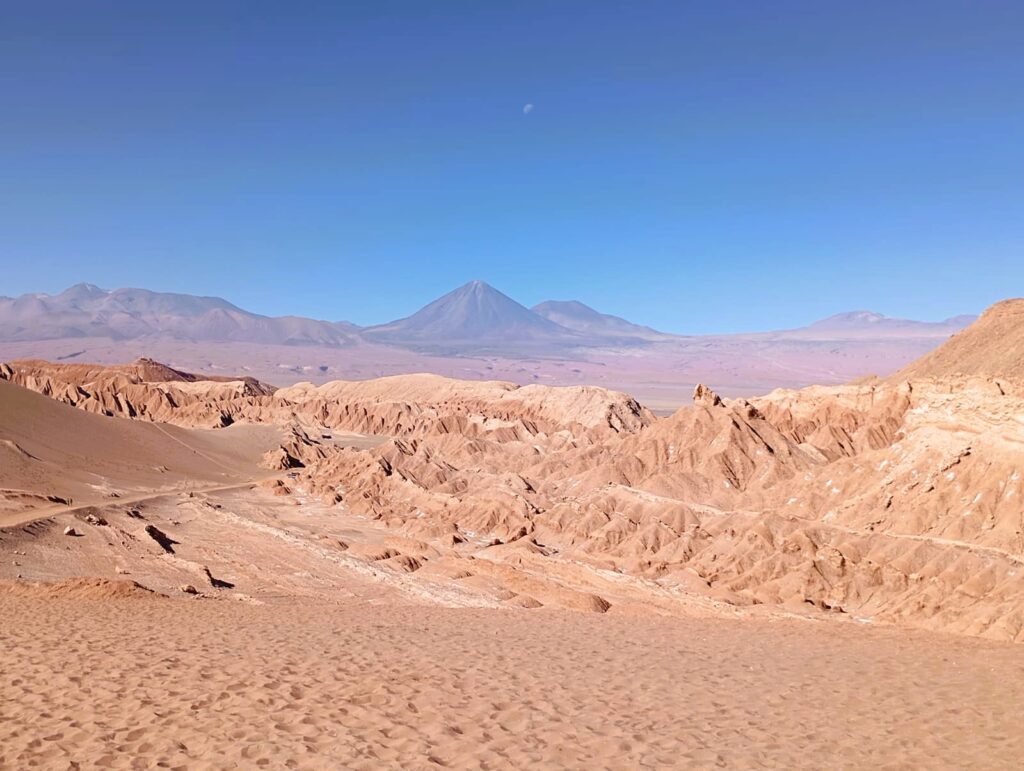
Valle de Marte (or Valle de la Muerte) is particularly appreciated for its wild and less touristy atmosphere. Compared to the other two, the area to explore is more limited and the visit can only be done independently, by car, bicycle or on foot.
The route winds through the rock formations of the valley, almost as if inside a canyon, although in some sections the landscape opens up, offering wider views. The main points of interest include the large dune, where it is possible to go sandboarding, and the viewpoint located at the highest part of the valley, which can be reached on foot or by car through the upper entrance.
An entrance fee is also required here, although it is cheaper than the one for Valle de la Luna.
Practical information about the Cordillera de la Sal
Altitude: between 2.500–2.700 m above sea level.
Climate: generally very hot and dry, especially in summer.
Valle de la Luna
– Duration: half day
– Entrance fee: required
– Visit: with an agency, by car or by bicycle
– Difficulty: easy
– Suitable for: everyone, with extra caution during the hottest periods
– Main attractions: Duna Mayor, Mina de Sal, Anfiteatro, Las Tres Marías, Mirador de Kari
Vallecito
– Duration: half day
– Entrance fee: free
– Visit: with an agency or by car; cycling is possible but more challenging
– Difficulty: easy
– Suitable for: everyone, with extra caution during the hottest periods and considering the lack of services
– Main attractions: Magic Bus, Copa del Mundo, Domo de Sal, viewpoint
Valle de Marte
– Duration: half day
– Entrance fee: required
– Visit: by car, bicycle or on foot
– Difficulty: easy
– Suitable for: everyone, with extra caution during the hottest periods
– Main attractions: canyon, Gran Duna, viewpoint
Salt lagoons
The salt lagoons of the Salar de Atacama offer a completely different experience from the landscapes of the Cordillera de la Sal. Here, water takes centre stage, emerging from underground and, thanks to its high salt concentration, which can reach levels up to 6–7 times higher than those of seawater, making it possible to float effortlessly. An experience that is as unusual as it is fun.
The only salt lagoons where swimming is possible are Laguna Cejar and the Baltinache lagoons. Here too, although both offer the chance to experience floating in the water, the excursions are quite different, and in most cases it is enough to choose one based on your interests.
Laguna Cejar
Among the salt lagoons, Laguna Cejar is the most famous and the closest to San Pedro de Atacama. The park entrance includes, in addition to the main lagoon, Laguna Piedra, which is the one where swimming is actually allowed. The lagoon is quite large and, although it has a dark bottom, it offers a beautiful view of the Cordillera de los Andes.
The excursion can be done with an agency or independently by car or bicycle. Organised tours generally also include a visit to the Ojos del Salar and Laguna Tebenquinche, while those travelling independently can choose to visit only the Laguna Cejar park.
The park has all the main services, including changing rooms and showers. Access times for independent visitors are different from those of organised tours.
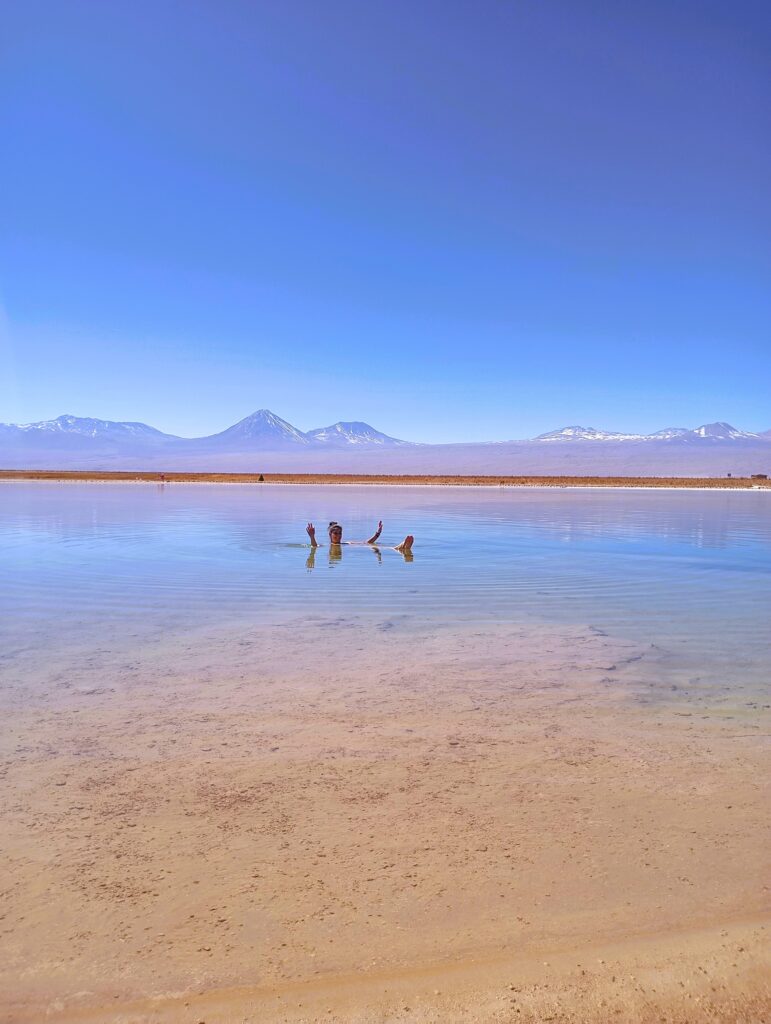
Baltinache Lagoons
The Baltinache lagoons are located about an hour’s drive from San Pedro de Atacama, much of it on unpaved roads. They consist of 7 turquoise-coloured lagoons, smaller than Cejar but set in a striking and isolated landscape, hence the name “Lagunas Escondidas de Baltinache”.
Here, a trail allows you to visit all seven lagoons on a walk of around 20–30 minutes, before swimming in just one of them (the first or the last, depending on the period).
The excursion can be done with an agency or independently by car. As with Cejar, the park has all the main facilities, including changing rooms and showers. Access times for independent visitors are the same as those for organized tours, but a booking system has been introduced to limit overcrowding. If you visit Baltinache independently, you may therefore be unable to enter without booking in advance.

Practical information about the salt lagoons
Altitude: between 2.300–2.500 m above sea level
Climate: generally hot and dry
Laguna Cejar
– Duration: half day
– Entrance fee: required
– Visit: with an agency, by car or by bicycle
– Difficulty: easy
– Suitable for: everyone, with attention in case of reduced mobility
– Main attractions: Laguna Cejar, Laguna Piedra and, optionally, Ojos del Salar and Laguna Tebenquinche as additional stops
Baltinache
– Duration: half day
– Entrance fee: required
– Visit: with an agency or by car
– Difficulty: easy
– Suitable for: everyone, with attention in case of reduced mobility
– Main attractions: seven turquoise-coloured lagoons
High-altitude landscapes
Around San Pedro de Atacama, the landscape changes rapidly as you climb towards the altiplano. High-altitude lagoons, vast salt flats, puna grasslands and volcanoes create some of the most spectacular landscapes in the area.
These excursions generally take place at altitudes above 3.500 metres and allow you to explore very different environments, all shaped by the altitude and the extreme conditions of the high mountains. Among the best-known are the Piedras Rojas and Lagunas Altiplanicas excursions and the so-called Ruta de los Salares, two different experiences that offer a comprehensive overview of the area.
Piedras Rojas and Lagunas Altiplanicas
The Piedras Rojas and Altiplanic lagoons area is characterised by high-altitude landscapes dominated by volcanoes and intensely coloured lagoons. The best-known site is the Salar de Aguas Calientes, known as Piedras Rojas, where the contrast between the reddish volcanic rocks, turquoise water and surrounding mountains creates a unique landscape.
The nearby high-altitude lagoons of Miscanti and Miñiques are an intense shade of blue and lie at the foot of their namesake volcanoes. This is the highest point of the excursion, at around 4,200 m above sea level. The area is also home to much of the typical wildlife of the altiplano, including vicuñas (vicuñas), one of the four South American camelid species, the suri, a large Andean bird similar to an ostrich, and, with a bit of luck, the zorro, or Andean fox.
The excursion can be done with an agency or independently by car. An organized tour generally lasts a full day and also includes Laguna Chaxa, home to several species of flamingos, stops in the villages of Socaire and Toconao, and a stop at the Tropic of Capricorn.
If travelling independently, you can choose to visit only the Salar de Aguas Calientes, the high-altitude lagoons, or follow the full itinerary offered by organized tours. In this case, however, you need to purchase entrance tickets to the various sites in advance and plan your timing and stops carefully, as the distances are considerable and park access hours are fairly strict. If you arrive after the indicated time, you will not be allowed to enter.
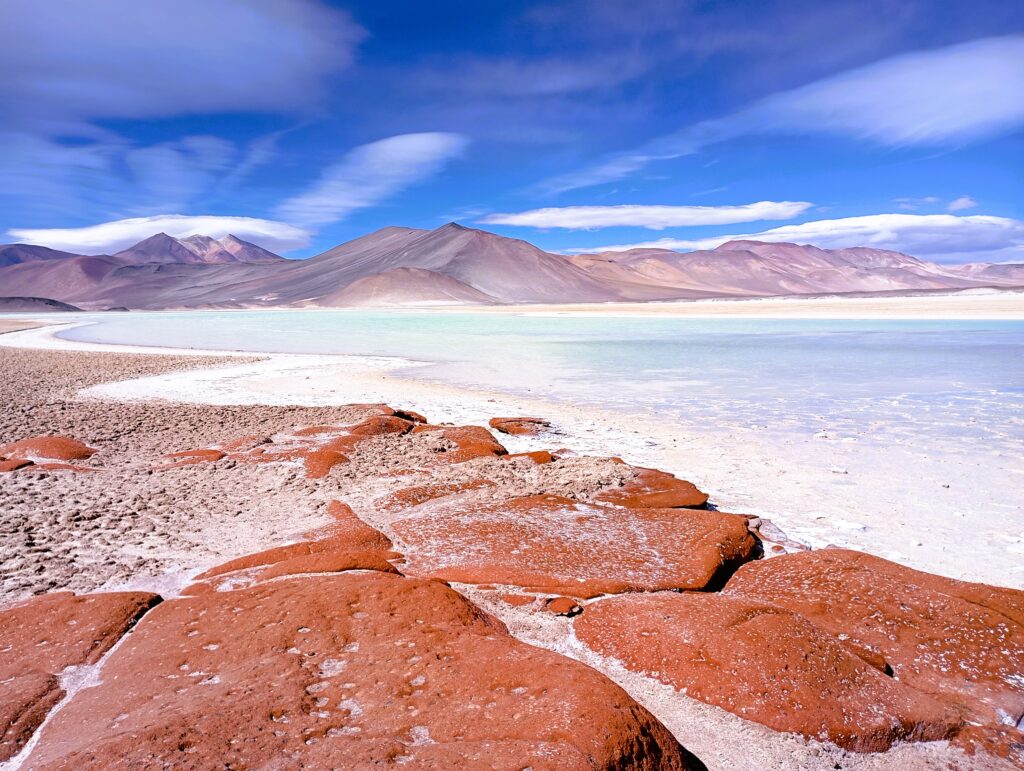 Piedras Rojas
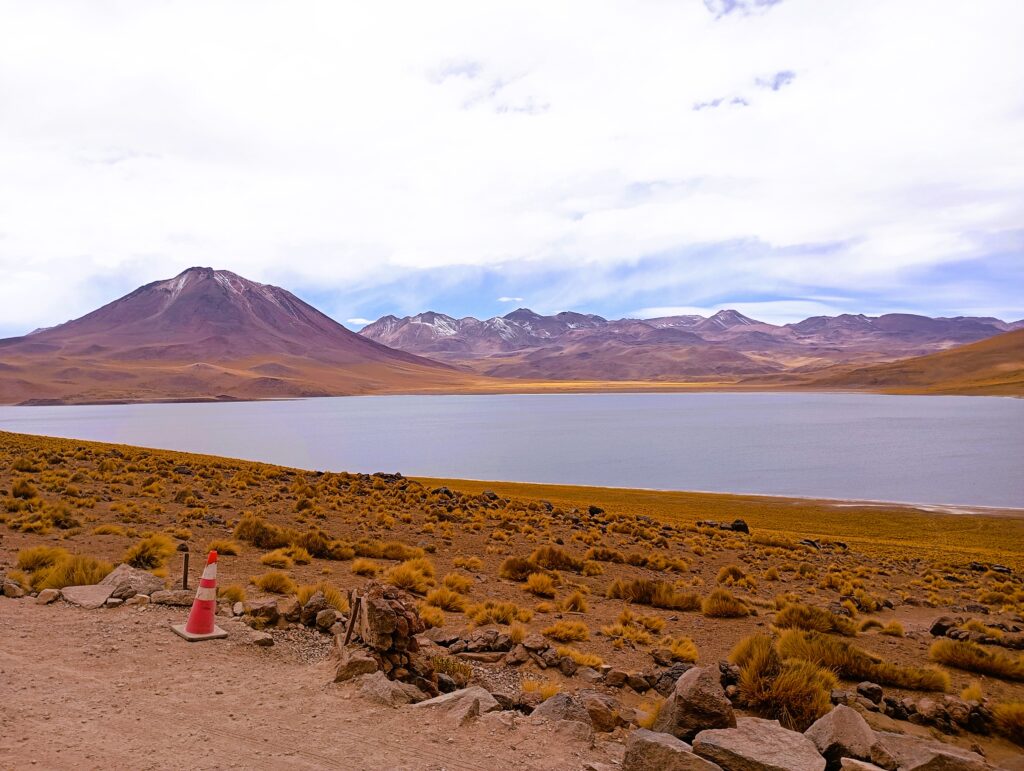 Laguna Miscanti
Ruta de los Salares
The Ruta de los Salares is one of the most scenic routes around San Pedro and passes through some of the most arid and remote landscapes of the altiplano. Unlike other excursions, the journey itself is an integral part of the experience.
The route follows the road towards Paso Jama, the border crossing with Argentina. Along the way, there are numerous viewpoints and places of interest, including one of the best viewpoints of Licancabur Volcano, Laguna Quepiaco, Salar de Quisquiro and the Monjes de la Pacana, enormous monoliths sculpted by erosion. You will also encounter numerous high-altitude wetlands (humedales and vegas), making this one of the best areas for observing local flora and wildlife.
The entire excursion takes place at high altitude, reaching 4,800 m above sea level, making it one of the highest-altitude excursions around San Pedro. It can be done with an agency or independently by car. Organized tours generally follow a set itinerary and include several stops along the way, for a total duration of around 7–8 hours. If you are travelling with your own vehicle, you can choose which points of interest to visit and how much time to spend at each stop.
One important thing to keep in mind is that, as this is not a formal park, there is no entrance fee. However, this also means that there are no services along the route. Given the long distances, it is therefore important to plan your day carefully and set off well prepared.
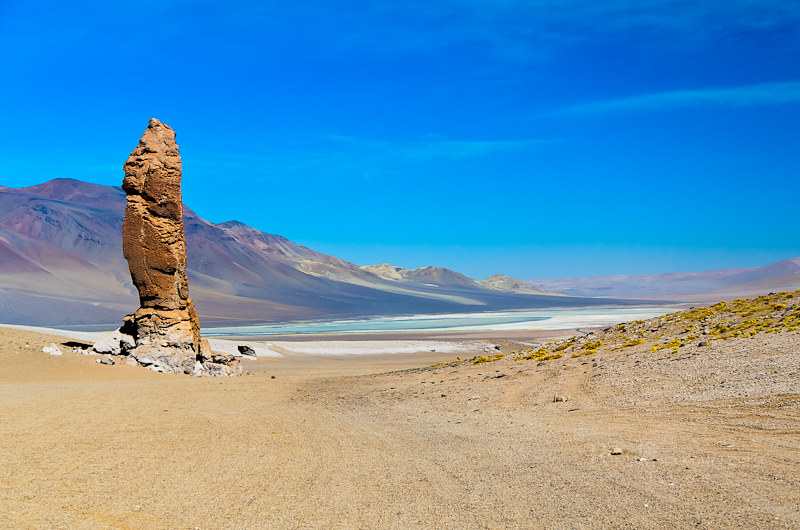
Practical information about the high-altitude landscapes
General altitude: between 3.500–4.800 m above sea level.
Climate: generally cold and windy throughout the year.
Piedras Rojas and the Altiplanic Lagoons
– Duration: full day (around 10 hours)
– Entrance fee: required
– Visit: with an agency or by car
– Difficulty: moderate, due to the altitude
– Suitable for: people without cardiovascular conditions or high blood pressure; generally not recommended for very young children
– Main attractions: Salar de Aguas Calientes, Miscanti and Miñiques Altiplanic Lagoons, Laguna Chaxa, Tropic of Capricorn, the villages of Toconao and Socaire
Ruta de los Salares
– Duration: full day (around 8 hours)
– Entrance fee: free
– Visit: with an agency or by car
– Difficulty: moderate, due to the altitude
– Suitable for: people without cardiovascular conditions or high blood pressure; generally not recommended for very young children
– Main attractions: Licancabur Viewpoint, Laguna Quepiaco, Salar de Quisquiro and the Monjes de la Pacana
Geothermal activity
Geothermal activity is another distinctive feature of the area around San Pedro de Atacama. Heat associated with the volcanic activity of the Andes heats underground water, which rises to the surface in some areas, giving rise to geysers, hot springs and hot-water pools.
Among the best-known experiences are the Tatio Geysers, the Puritama Hot Springs and the Purilibre trek. These are very different activities and experiences, but they all have one thing in common: geothermal features and naturally heated water.
Geyser del Tatio
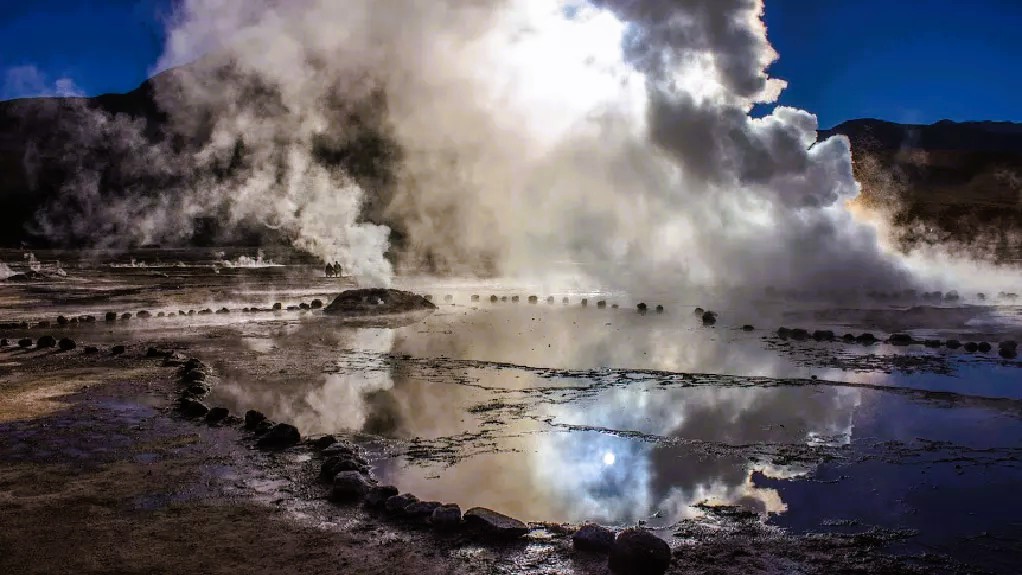
The Tatio Geysers are the largest geothermal field in the Southern Hemisphere and the third largest in the world, with more than 80 geothermal features. At 4.400 m above sea level, they are also considered the highest geothermal field on the planet. This excursion offers a unique landscape characterised by dozens of active geysers, fumaroles, pools of boiling water and mud, and columns of steam that reach their greatest intensity in the early morning. For this reason, organized tours leave very early, before sunrise. As temperatures rise throughout the morning, the steam columns gradually become less impressive.
The geothermal area lies on a vast high-altitude plateau surrounded by volcanoes and mountains, where you can also observe the region’s typical wildlife. Organized tours also include several stops on the way back, such as Río Putana, where you can observe local flora and fauna, and the village of Machuca, famous for its sheep-cheese empanadas and llama skewers.
The excursion can be done with an agency or independently by car. However, given the winding road, the possibility of icy conditions in winter and the very early start, joining an organized tour is recommended. It is also important to be careful inside the park and follow the safety rules: the water in the pools can cause severe burns, and there have been fatal accidents in the past.
Due to the particular environmental conditions, including the high altitude, low temperatures and the presence of geothermal and sulphurous vapours, the Tatio Geysers are the only excursion in San Pedro de Atacama where access is prohibited for children under 8 years old.
Termas de Puritama
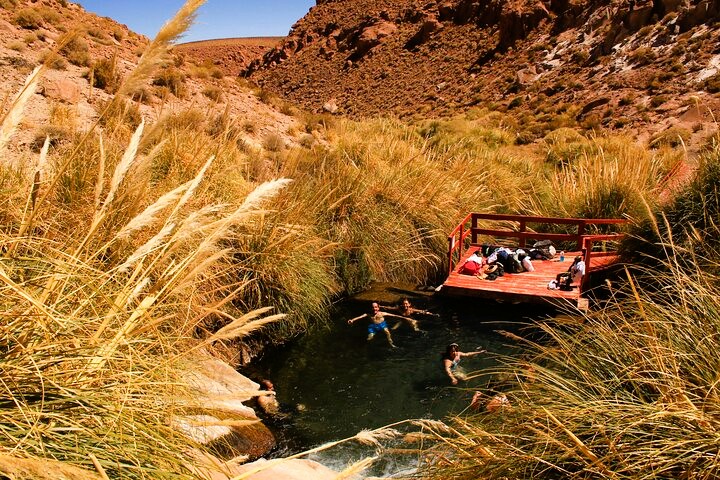
The Puritama Hot Springs are located inside a narrow canyon crossed by a small stream of thermal water. Here, water heated by geothermal activity underground feeds a series of natural pools connected by wooden walkways surrounded by vegetation.
Unlike many other excursions in the area, the main attraction is not so much the landscape as the opportunity to spend a few hours in a peaceful setting and relax in the thermal waters, which maintain a temperature of around 30°C year-round.
The visit can be arranged with an agency or independently by car. The hot springs are privately owned, and access is organized into specific time slots in the morning and afternoon. The entrance fee is also relatively high compared with other attractions. The complex has the main facilities, including changing rooms and relaxation areas. If you are travelling independently, you can purchase your entrance ticket online, keeping in mind that the number of available spots is limited.
Purilibre Trek
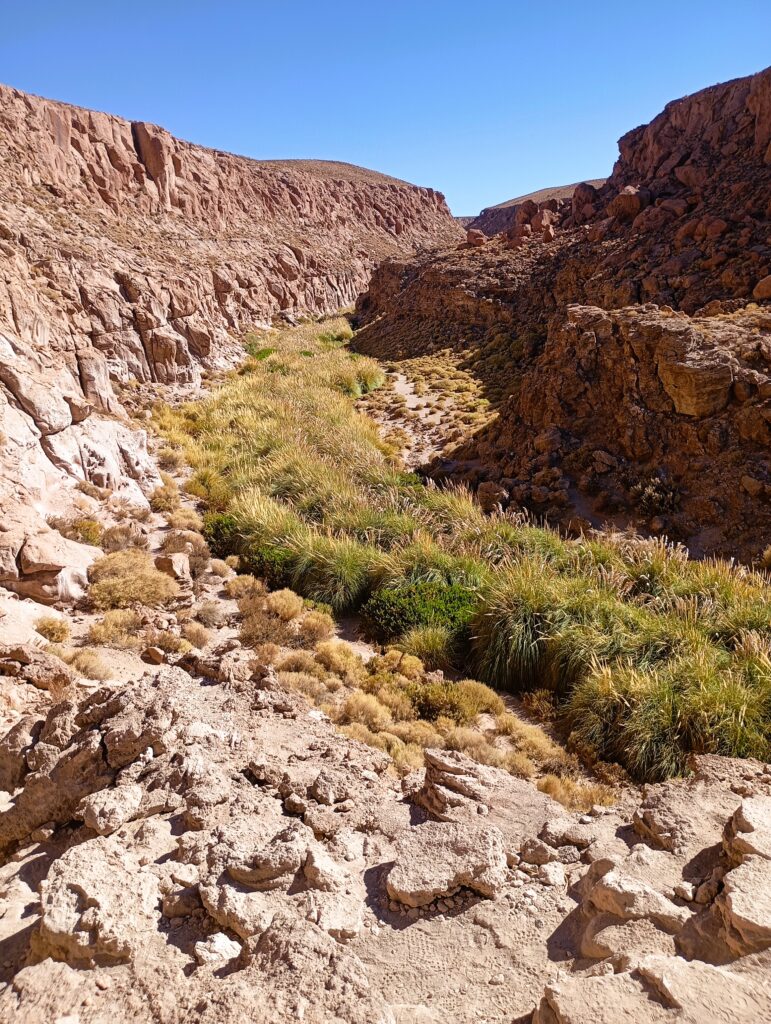
The Puri-libre trek is the free (libre) section of the Río Puritama, the same thermal watercourse that feeds the Puritama Hot Springs. Here, reaching the natural pools where you can swim requires a short trek of around 30 minutes along the river, between rocky walls and riparian vegetation, creating an environment very different from the typical desert landscapes of the region. The canyon is also home to numerous cardón cacti typical of the area.
In this section, the water temperature is around 18–20°C, as this is the lower part of the watercourse and the water gradually loses heat as it flows downstream.
The excursion can be done with an agency or independently by car. The route is not particularly technically difficult, but it does require some familiarity with walking on uneven terrain. Although the trail is relatively easy to follow, it is not signposted.
There are no facilities in the area and, precisely because of the more wild nature of the experience, it is advisable to plan your visit carefully.
Practical information about geothermal activities
General altitude: between 3.200–4.400 m above sea level.
Climate: generally cold in the morning and cool during the day.
El Tatio Geysers
– Duration: half day
– Entrance fee: required
– Visit: with an agency or by car
– Difficulty: moderate, due to the altitude and low temperatures
– Suitable for: people without cardiovascular conditions or high blood pressure; children under 8 years old are not permitted
– Main attractions: geothermal field, Río Putana, Machuca village
Puritama Hot Springs
– Duration: half day
– Entrance fee: required
– Visit: with an agency or by car
– Difficulty: easy
– Suitable for: everyone
– Main attractions: thermal pools and Puritama Canyon
Purilibre Trek
– Duration: half day
– Entrance fee: free
– Visit: with an agency or by car
– Difficulty: easy/moderate, due to uneven terrain
– Suitable for: most travellers, not recommended for people with reduced mobility
– Main attractions: thermal pools and Puritama Canyon
Archaeological sites and Atacameño culture
In addition to its spectacular landscapes, the area around San Pedro de Atacama is also home to an important historical and cultural heritage connected to the people who have inhabited the desert for thousands of years and to traditions that are still part of local communities today. It is no coincidence that San Pedro de Atacama is also known as the “archaeological capital of Chile”, thanks to the wealth of archaeological remains associated with the Atacameño culture. Through archaeological sites and ancient remains, you can discover another side of this destination.
Among the best-known experiences are the Yerbas Buenas petroglyphs, usually visited together with the Valle del Arcoíris, as well as Pukará de Quitor and Aldea de Tulor.
Petroglifos de Yerbas Buenas and Valle del Arcoíris
The Yerbas Buenas petroglyphs are one of the most important archaeological sites in northern Chile. Here, you can see numerous rock carvings created from around 3,000 years ago by the ancient peoples who travelled through and inhabited the region, providing evidence of caravan routes and human presence in the area dating back to remote times.
The petroglyphs are generally visited together with the Valle del Arcoíris, located in the Cordillera de Domeyko just a few kilometres from the archaeological site. The valley takes its name from the many shades of colour found in its rocks, resulting from their different mineral composition. Red, green, white and ochre tones create a particularly striking landscape.
The two sites can be visited with an agency or independently by car. Organized tours generally also include several scenic stops. To reach Valle del Arcoíris, you have to cross a small ford, which can be difficult to cross with a regular car at certain times of year. If you also want to visit Valle del Arcoíris, it is therefore advisable to check the road conditions in advance or join an organized tour. This experience is one of the best options for combining landscapes and archaeology in a single day.
 Petroglifos de Yerbas Buenas
 Valle del Arcoiris
Pukará de Quitor
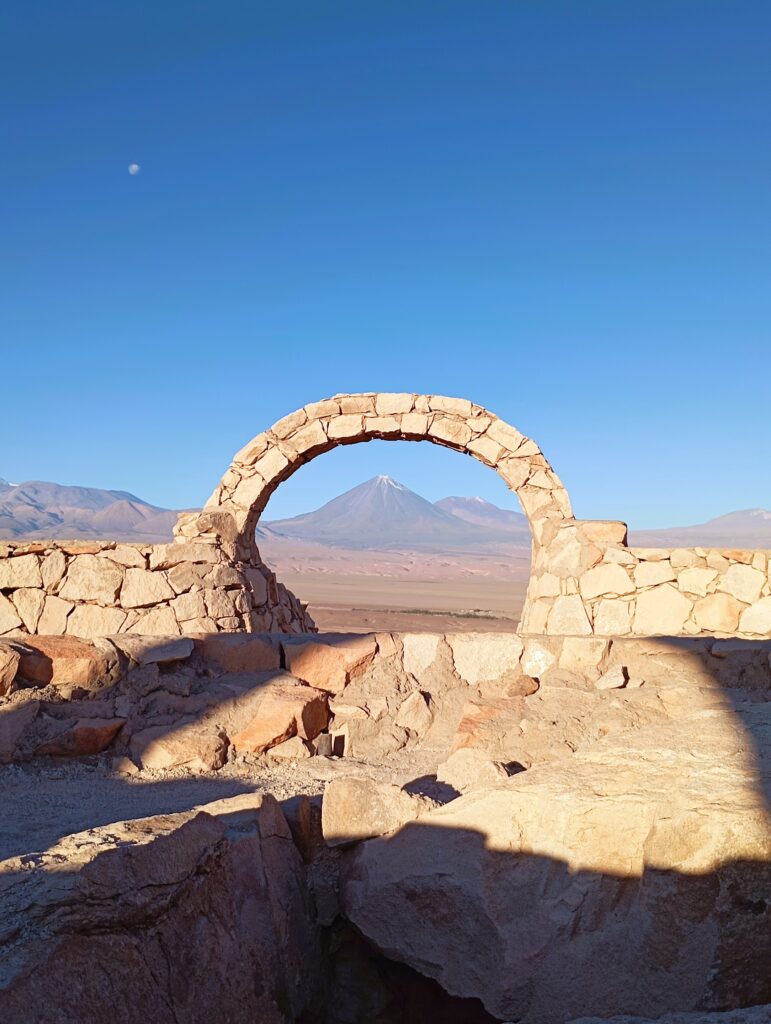
The Pukará de Quitor is one of the most important archaeological sites around San Pedro de Atacama. It is an ancient fortified defensive settlement built by the Licanantay people in the 12th century and subsequently expanded over the centuries. Its strategic location, on a hill overlooking the Río San Pedro valley, allowed its inhabitants to control the main routes into the area.
Today, the site can be explored via a short trail leading to several viewpoints overlooking the surrounding valley and the remains of the ancient stone structures. Although much of the original construction is no longer preserved, the Pukará is an important historical site for understanding the culture of the pre-Columbian peoples who inhabited the region.
The site can be reached independently by car, bicycle or on foot, given its short distance from the town. The visit itself is on foot and takes around 2 hours.
Aldea de Tulor
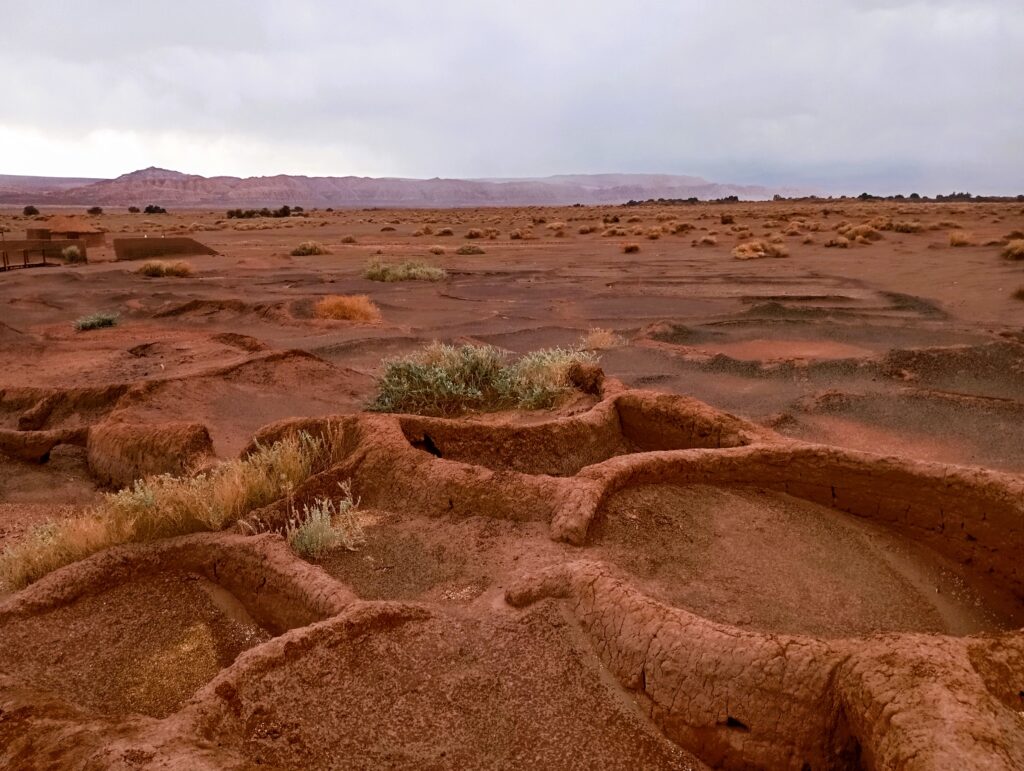
The Aldea de Tulor is one of the oldest known settlements in northern Chile and represents one of the testimonies to the first sedentary communities that developed in the region. Founded by the Licanantay people more than 2.500 years ago, it consisted of circular adobe dwellings and was home to a community mainly engaged in agriculture and livestock farming.
Over the centuries, much of the settlement was gradually covered by sand, and today it is possible to see part of the original structures, along with a reconstruction that helps visitors understand what the village may have looked like in the past. The visit offers an insight into the history and way of life of the ancient peoples who inhabited the Atacama.
Aldea de Tulor can be reached independently by car or bicycle. The site is located just a few kilometres from San Pedro de Atacama, admission is paid, and the visit takes around one hour.
Practical information
General altitude: between 2.300–3.300 m above sea level.
Climate: generally dry and sunny throughout the year.
Valle Arcoíris and Petroglifos de Yerbas Buenas
– Duration: half day
– Entrance fee: required
– Visit: with an agency or by car
– Difficulty: easy
– Suitable for: everyone
– Main attractions: rock carvings, multicoloured rock formations, Cascada Seca
Pukará de Quitor
– Duration: around 2 hours
– Entrance fee: required
– Visit: by car, bicycle or on foot
– Difficulty: easy
– Suitable for: everyone
– Main attractions: archaeological site and viewpoints over the valley
Aldea de Tulor
– Duration: around 1 hour
– Entrance fee: required
– Visit: by car or bicycle
– Difficulty: easy
– Suitable for: everyone
– Main attractions: circular adobe dwellings and village reconstruction
Volcano trekking and ascents
Among the most exciting experiences you can have in San Pedro de Atacama are undoubtedly volcano ascents. In this corner of the Andes, you can climb peaks above 5.000 metres and take in extraordinary views from above, with lagoons, salt flats and mountain ranges stretching towards the borders with Bolivia and Argentina.
There are several different ascents available, requiring different levels of preparation. Some are accessible even to those without extensive mountain experience, while others are a real physical challenge due to the altitude. In all cases, these experiences offer a completely different perspective on the Atacama Desert, with unparalleled views over the landscapes of the altiplano and the surrounding mountains.
Cerro Toco
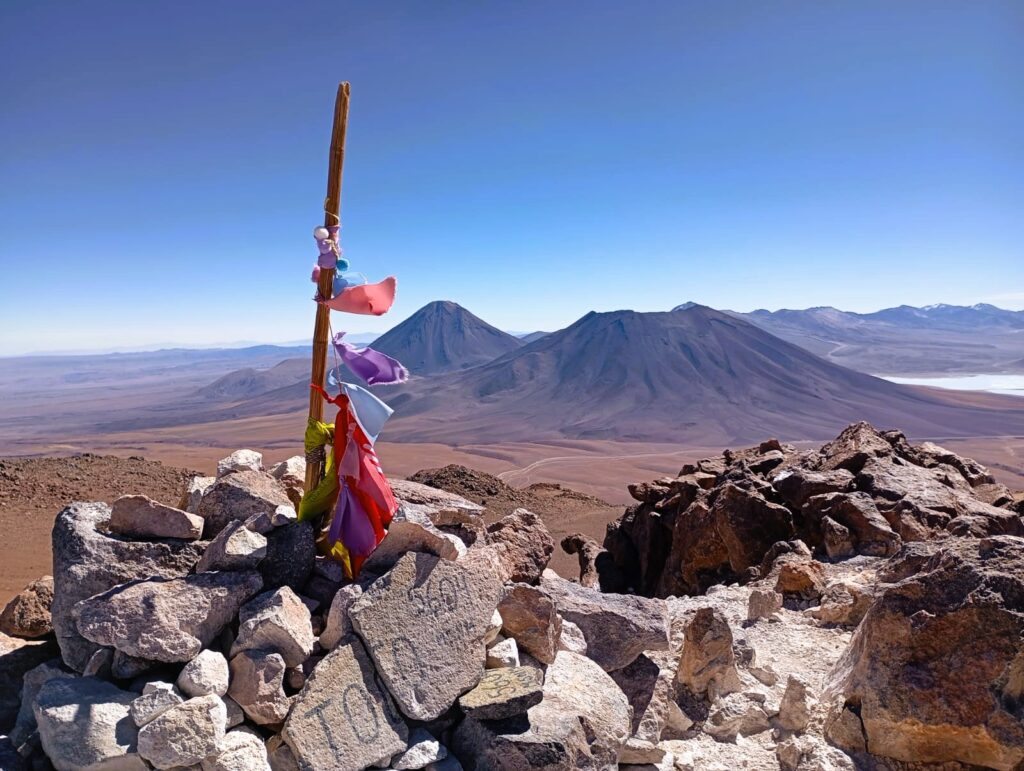
At 5.604 metres, Cerro Toco is an extinct volcano and one of the most accessible ascents around San Pedro de Atacama. For many travellers, it is often their first experience of high-altitude mountaineering. Located on the border with Bolivia, it offers spectacular views of the surrounding volcanoes, particularly Licancabur, as well as the vast landscapes of the Altiplano.
The ascent can only be done as part of an organized tour and involves a vehicle transfer to around 5.200 metres, from where you continue on foot along a well-defined trail to the summit. The climb generally takes between two and three hours and involves no particular technical difficulties, apart from the altitude. The guides, who specialize in high-altitude mountaineering, carry oxygen and a satellite phone for use in emergencies.
Cerro Toco is a high-altitude hike that allows you to reach a summit above 5.600 metres with relative ease. For this reason, it is often chosen by those who want to gradually get used to high altitude or prepare for more demanding ascents.
Given the high altitude, it is advisable to undertake this excursion after spending a few days acclimatizing in San Pedro de Atacama and to wear clothing suitable for cold and windy conditions.
Lascar
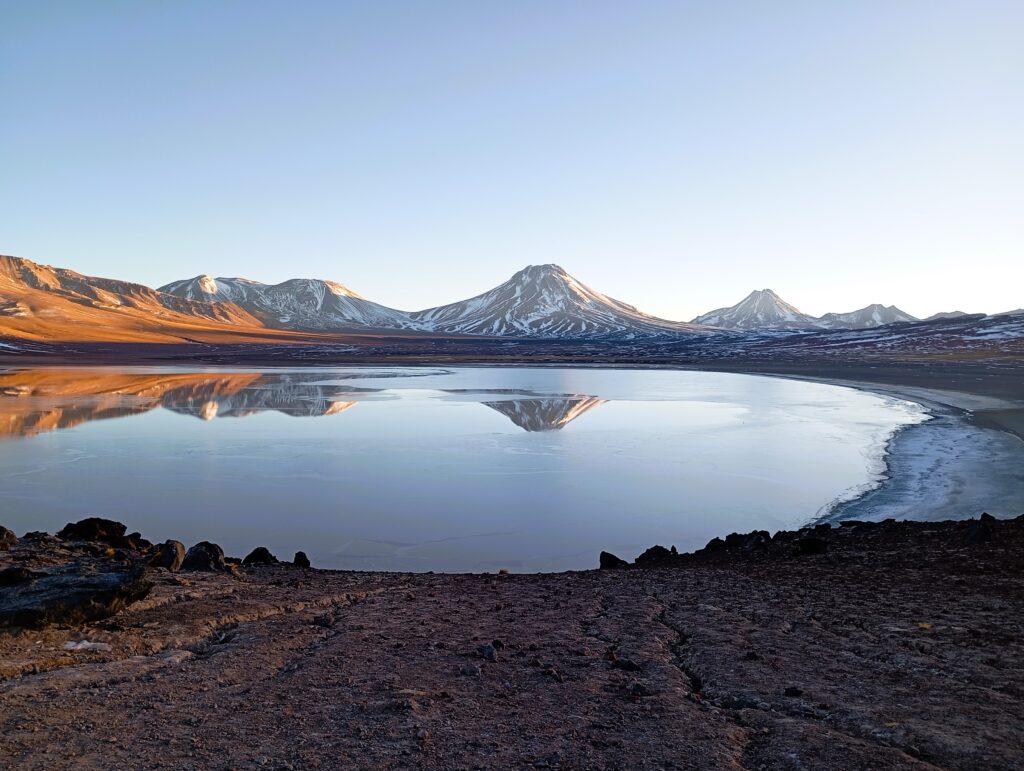
The Lascar Volcano is one of Chile’s best-known active volcanoes. Located southeast of San Pedro de Atacama, it dominates the surrounding landscape and offers sweeping views of the mountains and vast Andean highlands. For the Lickanantay communities, Lascar is considered the “father of all volcanoes”, an important element of local tradition and cosmology.
This excursion can also only be done as part of an organized tour. A stop at Laguna Lejía, a high-altitude lagoon nestled among imposing volcanoes and known for its intensely coloured waters, is generally included along the way. You then continue to the starting point of the ascent. Although Lascar’s summit is slightly lower than Cerro Toco (5.592 m above sea level), the climb is more demanding because the starting point is already at around 4.900 metres. From there, the trail leads to the crater rim, where you can observe the fumaroles and, on clear days, enjoy spectacular views. The ascent generally takes between three and four hours and is moderately difficult, mainly due to the altitude.
Due to volcanic activity, the Lascar excursion may be temporarily suspended by the relevant authorities. This cannot be predicted far in advance and depends on the volcano’s level of activity at the time of the visit.
Again, given the high altitude and physical effort involved, it is advisable to attempt the ascent only after an adequate period of acclimatization and with clothing suitable for low temperatures and strong winds.
Other volcanoes
In addition to the volcanoes mentioned above, it is possible to arrange ascents of other peaks around San Pedro de Atacama. Among the best known are Sairecabur Volcano (5.987 m a.s.l.), which can be climbed in a single day, Licancabur Volcano (5.916 m a.s.l.) and San Pedro Volcano (6.145 m a.s.l.), which generally require two days, including one night in a campsite or mountain refuge.
These ascents are aimed at more experienced hikers who are well acclimatized. They require good physical preparation and are organized only on request. Costs are also significantly higher than for the more common ascents.
These are just some of the many possible ascents in the area: there are in fact many other peaks that can be reached via specific routes.
Practical information about volcano ascents
General altitude: between 4.800–5.600 m above sea level.
Climate: cold and windy throughout the year.
Cerro Toco
– Duration: around 7 hours
– Entrance fee: free
– Visit: only with an agency
– Difficulty: challenging
– Suitable for: people without cardiovascular conditions or high blood pressure; not suitable for young children
– Main attractions: views of Licancabur Volcano, the Altiplano and Laguna Blanca in Bolivia
Lascar Volcano
– Duration: around 10 hours
– Entrance fee: required
– Visit: organized tour only
– Difficulty: challenging
– Suitable for: people without cardiovascular conditions or high blood pressure; not suitable for young children
– Main highlights: Laguna Lejía, active crater, fumaroles, and panoramic views of the surrounding volcanoes
Other activities and experiences
San Pedro de Atacama offers a wide range of other activities that allow you to experience the desert from different perspectives. From stargazing to outdoor sports, you can enrich any itinerary with relaxing or adventurous experiences.
Astronomical tours and stargazing
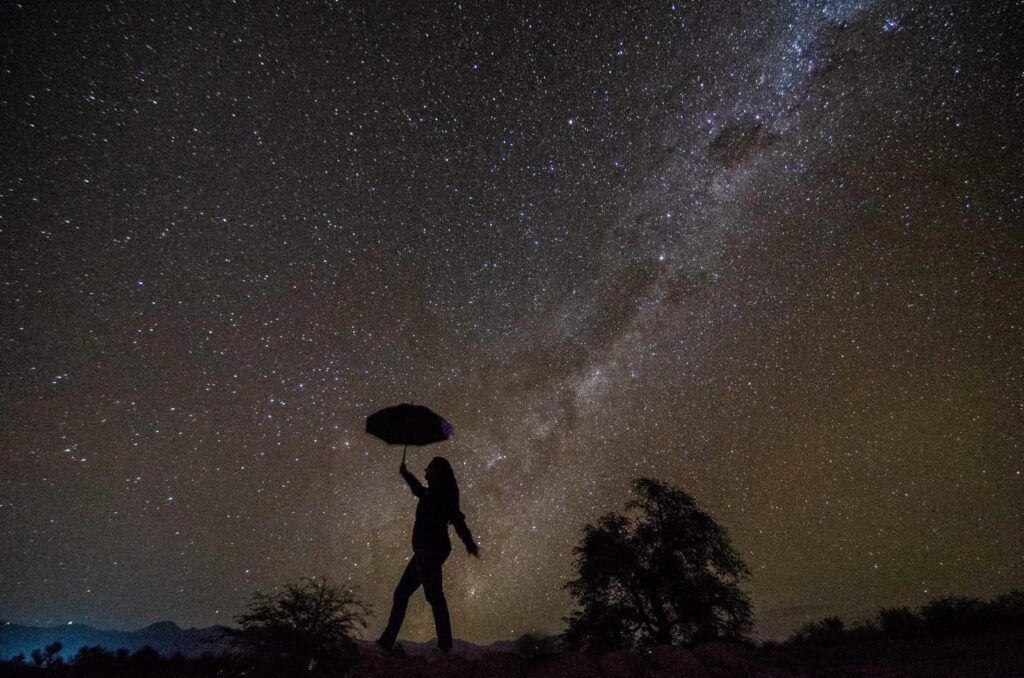
Thanks to its altitude, extremely dry climate and almost complete absence of light pollution, the area around San Pedro de Atacama is considered one of the best places in the world for stargazing. On the clearest nights, it is possible to see thousands of stars, the Milky Way, and numerous planets and constellations.
The experience includes a transfer to areas away from the town’s lights and, depending on the tour, may include explanations of general astronomy and Andean cosmology, observation with the naked eye and through professional telescopes, as well as photographs of the night sky. Depending on the experience chosen, the number of participants, telescopes and photographs included may vary, as may the availability of additional services such as cocktails and a campfire.
This is an experience suitable for everyone, particularly popular with those who want to discover the desert after sunset as well.
Stargazing depends on weather conditions and the phases of the moon. To make the most of the experience, it is advisable to choose nights with less moonlight and wear clothing suitable for the low temperatures at night.
Sandboarding
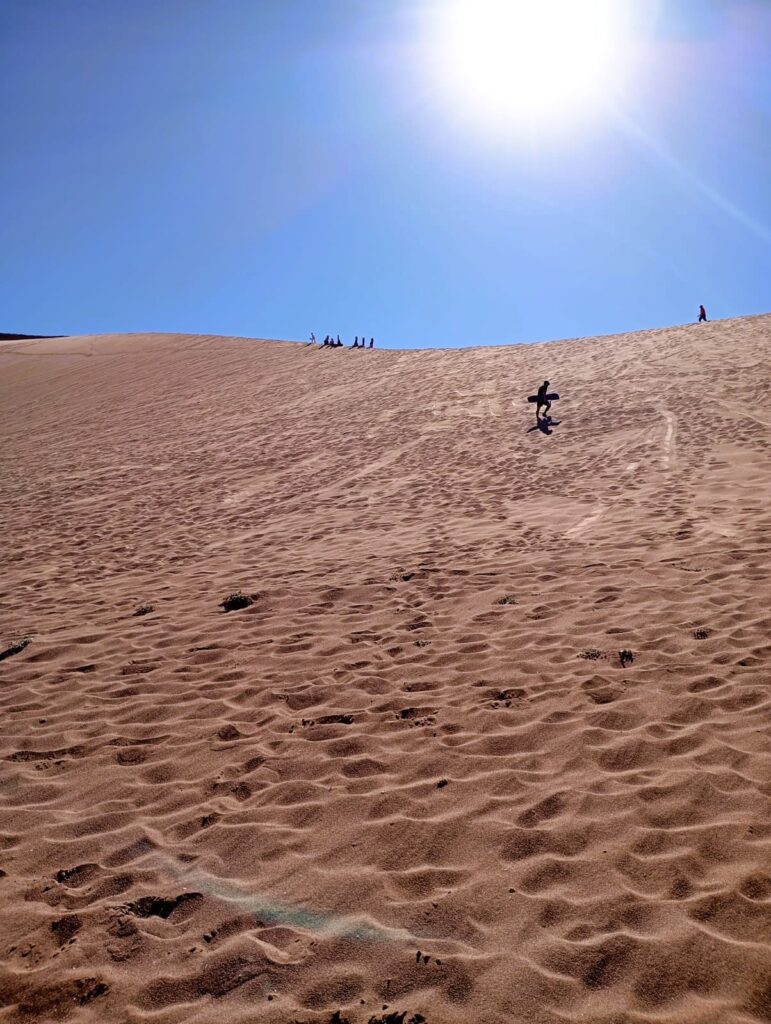
The large dunes of the Cordillera de la Sal offer the opportunity to try sandboarding, a sport that involves riding down sandy slopes on a specially designed board. Activities take place mainly in the Valle de Marte, one of the best areas for this sport.
The experience includes a transfer to the dunes, a brief introduction to the technique and enough time to make several runs. No previous experience is required, and all necessary equipment is provided by the organizers. Since there are no lifts, you have to climb back up with the board on your back after each run.
It is an adrenaline-filled activity suitable for both beginners and more experienced riders. However, given the intense sun exposure and the physical effort required, it is not suitable for everyone.
Horseback riding
Horseback riding excursions take place mainly in the Cordillera de la Sal (except within Valle de la Luna park) and in the Valle de Catarpe, crossing canyons, plains and landscapes typical of the Atacama Desert.
Excursions are organized in small groups and can vary in duration, from a few hours to a full day. Depending on the itinerary, some excursions offer the chance to enjoy the sunset or reach places that are difficult to access with regular vehicles.
No previous experience is required, but it is worth remembering that, although accustomed to human contact and generally docile, horses are still animals and can sometimes behave in unpredictable ways.

Mountain biking
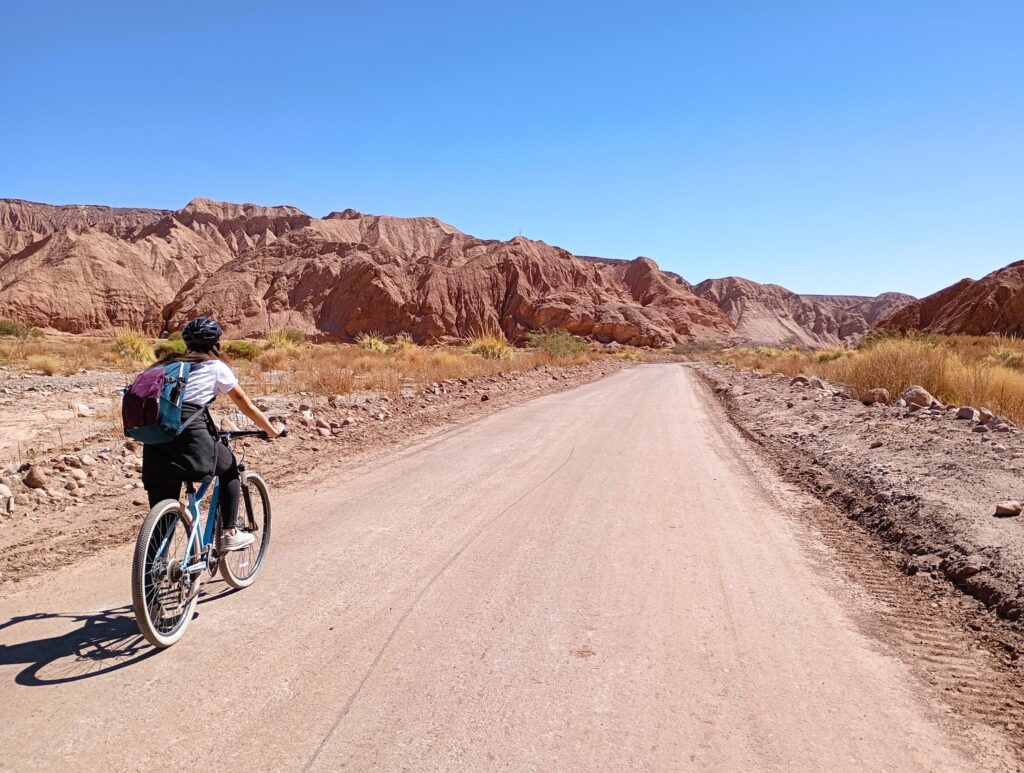
The area around San Pedro de Atacama also offers plenty of options for those who enjoy mountain biking, with trails and dirt roads providing access to different parts of the region. Among the most popular routes are those leading to the Valle de Catarpe, the Garganta del Diablo and the Cordillera de la Sal.
Excursions can be done independently or with a guide and can vary in duration, from a few hours to a full day.
Difficulty varies considerably depending on the route chosen and your level of fitness, making mountain biking an option suitable for both beginners and more experienced cyclists.
Practical information
General altitude: between 2.300 and 3.000 m above sea level.
Climate: generally dry and sunny throughout the year.
Stargazing
– Duration: around 3 hours
– Entrance fee: not applicable
– Visit: only with an agency
– Difficulty: easy
– Suitable for: everyone
– Main attractions: night sky observation and astrophotography
Sandboarding
– Duration: half day
– Entrance fee: required
– Visit: with an agency or independently by renting the equipment
– Difficulty: moderate
– Suitable for: people in good physical condition
– Main attractions: Valle de Marte dunes and sand descents
Horseback riding
– Duration: from 2 hours to a full day
– Entrance fee: depending on the site, it may be required
– Visit: with a guide
– Difficulty: easy-moderate
– Suitable for: beginners and experienced riders
– Main attractions: desert landscapes and sunset
Mountain biking
– Duration: from a few hours to several days
– Entrance fee: depending on the site, it may be required
– Visit: independently or with a guide
– Difficulty: variable
– Suitable for: beginners and experienced cyclists
– Main attractions: canyons, valleys and desert landscapes
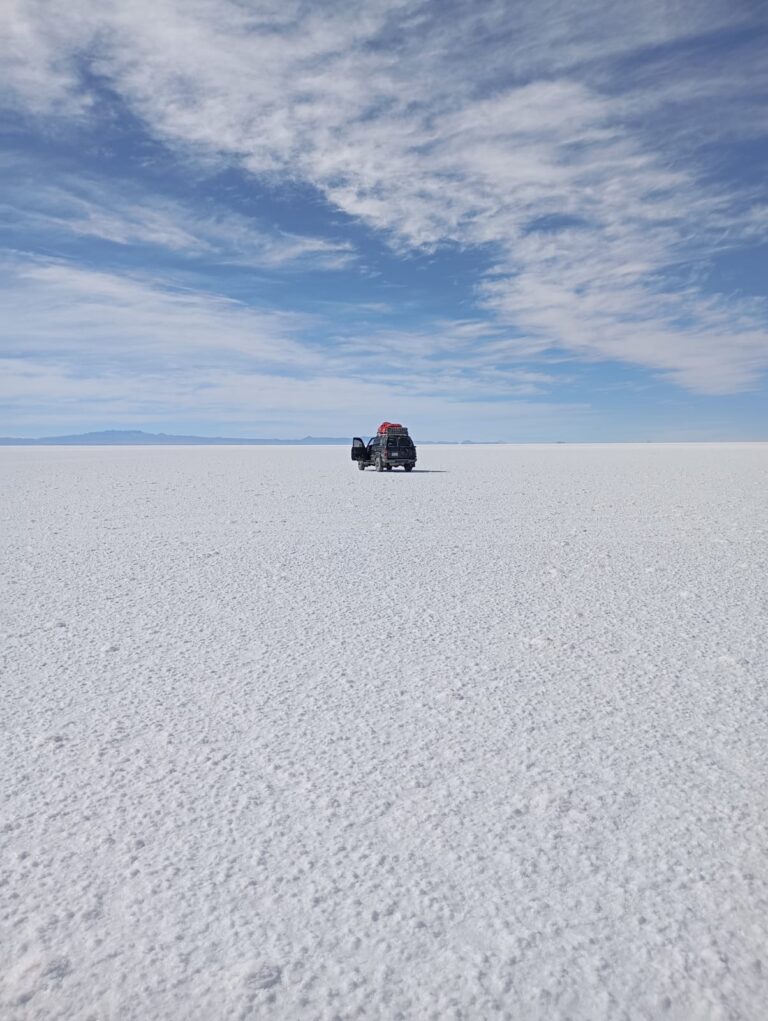
Salar de Uyuni from San Pedro de Atacama
Data la vicinanza tra il nord del Cile e il sud della Bolivia, è possibile combinare San Pedro de Atacama e il Salar de Uyuni in un unico viaggio. I tour attraversano l’Altiplano boliviano e consentono di raggiungere Uyuni partendo da San Pedro oppure di effettuare il percorso inverso.
Si tratta di un’esperienza di più giorni che si svolge esclusivamente con agenzie autorizzate e che rappresenta un’ottima soluzione per chi desidera visitare due delle destinazioni più belle del Sud America.
→ If you are thinking of combining San Pedro de Atacama with the Salar de Uyuni, in the complete salar guide you will find all the useful information to organise this journey, from available itineraries to practical tips.
How to choose excursions in San Pedro de Atacama
In a destination like this, there is no perfect itinerary that works for everyone. The choice of excursions depends on several factors, including the time available, budget, the altitude you are able to handle, the type of trip you want to have, and whether there are children or older people in your group.
The rest of your itinerary can also influence your choice of excursions. For example, if you are visiting Bolivia on a Salar de Uyuni tour, some experiences in San Pedro may become less of a priority, as you will already see numerous high-altitude lagoons and stop at hot springs along the way. Similarly, if your trip includes northwestern Argentina, the Ruta de los Salares may be less of a priority, since you will already be travelling along that road to reach the border. The Valle del Arcoíris may also be less important if you are visiting Purmamarca, as some of the landscapes there have similar characteristics.
This does not mean that these excursions should be ruled out from the outset: each one has its own unique characteristics and deserves to be considered in the context of your trip. The goal is to create a well-balanced itinerary, avoiding experiences that are too similar to one another and making the most of the time available.
→ If you are unsure which excursions to choose or would like a personalised itinerary based on your interests, available time and travel plans, you can take a look at my travel planning services I can help you create a tailor-made itinerary, optimising your time, transfers and budget.
If it is your first time in San Pedro de Atacama, I recommend trying to explore the most representative environments of the region. Ideally, you should choose at least one experience from each of the main categories: the Cordillera de la Sal, the salt lagoons, the high-altitude landscapes, geothermal activities such as the El Tatio Geysers, and an astronomical tour.
However, if you only have two or three days available, I would prioritise the Cordillera de la Sal, the high-altitude landscapes and an astronomical tour. In my opinion, these are the experiences that best represent the essence of San Pedro de Atacama and the extraordinary variety of landscapes that characterise this region.
If you have a few extra days, you can add the other experiences according to your interests, giving you a more complete view of the Atacama Desert.