Table of contents
Tatio Geysers: where they are and what makes them special
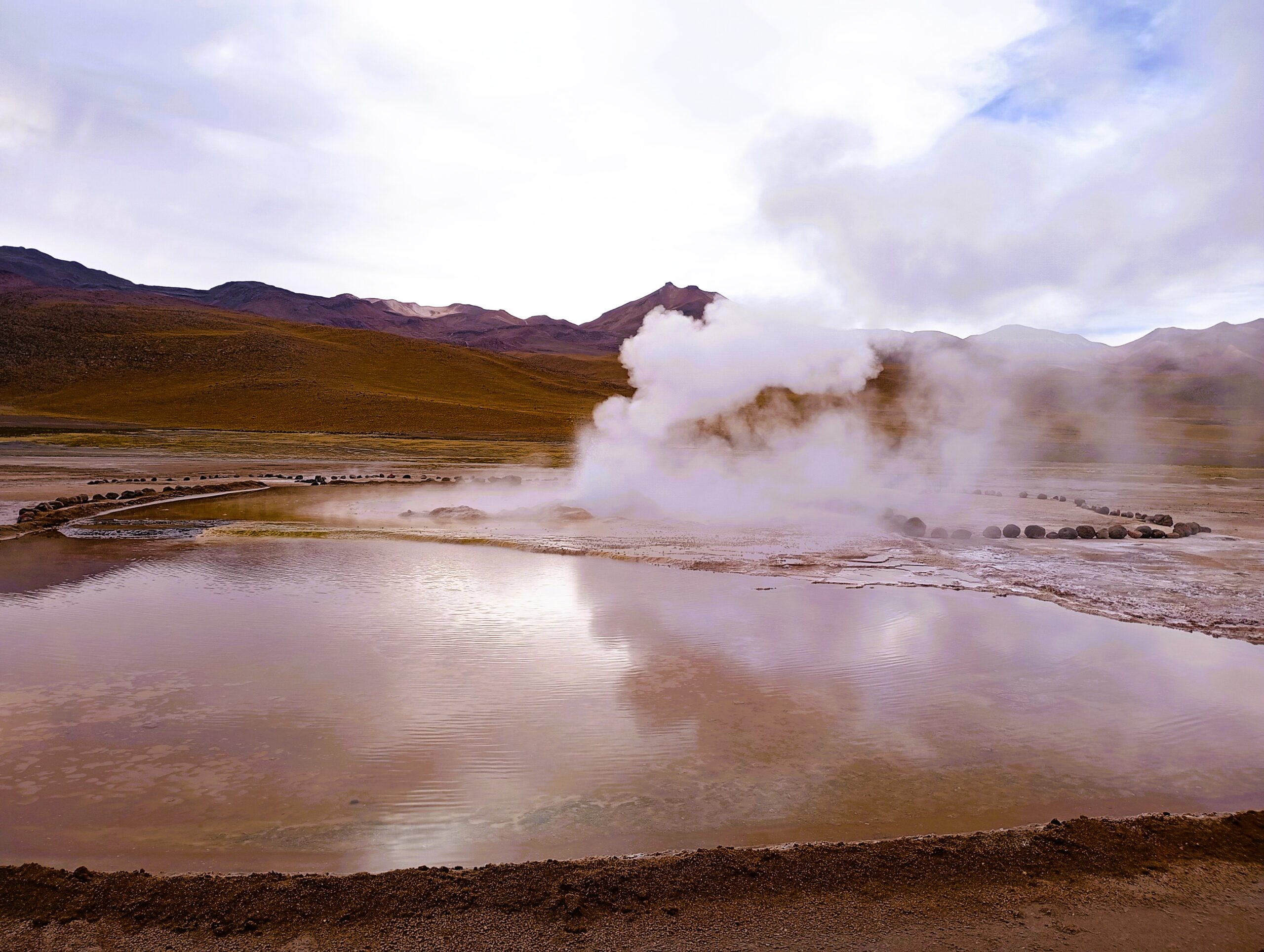
At around 90 km from San Pedro de Atacama, in the Andes, lies one of the most spectacular landscapes in the Atacama Desert: the Tatio Geysers geothermal field. Located at an altitude of around 4.300 metres, it sits on a vast plateau surrounded by volcanoes and is one of the largest and highest geothermal fields in the world. With more than 200 active features, including geysers, fumaroles, hot springs and boiling mud pools, it covers around 30 km2, making it the third-largest geothermal field in the world after Yellowstone in the United States and Kronotski in Russia.
The name Tatio comes from Kunza, the language traditionally spoken by the Atacameño people. It is thought to derive from the expression Tata-iu, generally translated as “the grandfather who cries” (Tata, grandfather, and iu, to cry). The meaning of the name has been associated with several elements of the landscape: the water and steam rising from the ground, producing sounds and hissing noises like someone crying; the streams that flow towards the geothermal field and converge in what are known as the “grandfather’s eyes”; and the distinctive shape of one of the surrounding volcanic formations, which resembles a reclining human figure. These interpretations are also part of a broader Andean worldview, in which the earth (Pachamama) and mountains or volcanoes are not seen as inanimate elements, but as true ancestors and protectors. Water springs and geysers are therefore understood as channels through which the earth expresses its emotions.
What makes Tatio particularly interesting, however, is not only its size, but also the quantity and variety of geothermal features that can be observed, as well as the presence of extremophile microorganisms, capable of living in extreme environmental conditions. At this altitude, water behaves differently too: because of the lower atmospheric pressure, its boiling point is around 86–87 °C, rather than 100 °C as at sea level. A detail that helps illustrate the extreme conditions in which this environment develops.
The landscape of Tatio
Structure and geology of the geothermal field
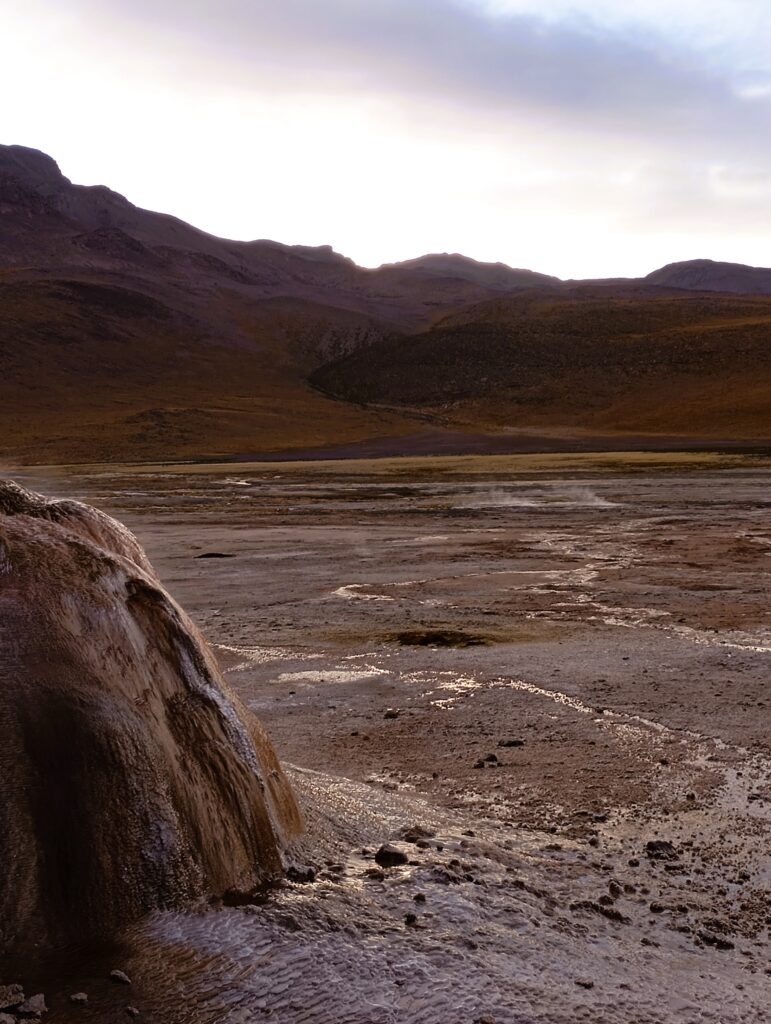
The Tatio geothermal field is not a uniform area, but is divided into three main basins: Upper, Middle and Lower Basin, each with different characteristics and geothermal features. The Upper Basin is the largest and contains most of the geysers and eruptive springs. It is also characterised by extensive areas covered in siliceous sinter, a porous mineral deposit composed mainly of amorphous silica, which forms at the Earth's surface when silica dissolved in hot thermal waters rapidly precipitates. The Middle Basin is a flatter area, with numerous pools and fountain-like features, while the Lower Basin develops along the Río Salado, where some springs emerge directly within or along the edges of the river. Although the geothermal features cover a total area of around 30 km2, most of them are concentrated within an area of 10 km2.
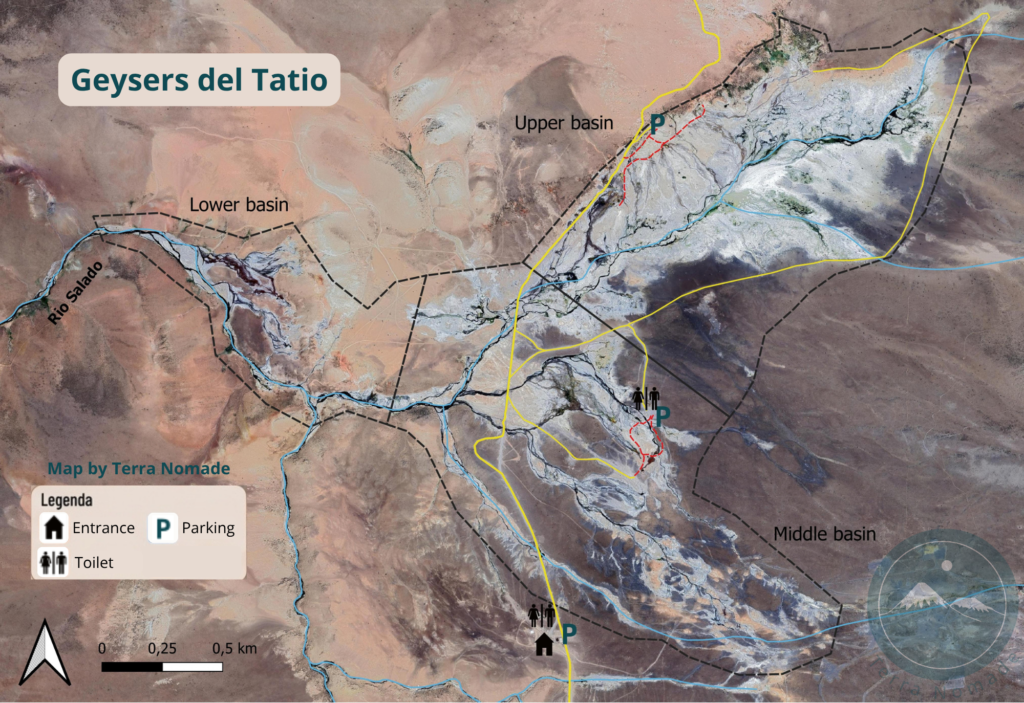
From a geological perspective, the field lies within a depressed tectonic structure, or graben, bounded by faults and fractures that facilitate the circulation of fluids at depth. The exposed rocks are mainly volcanic in origin and include ignimbrites, lava flows and volcaniclastic deposits, with a significant presence of silica-rich rocks. The structure of the rocks and fractures therefore controls the pathways through which hot water and steam can rise towards the surface.
As with any geothermal system, the development of geysers and other hydrothermal features requires the simultaneous presence of groundwater, a heat source, and a network of fractures, cavities and conduits that allows the water to circulate and, under certain conditions, build up pressure. When the underground system allows pressure to build up and be released periodically, geysers can form; when hot water reaches the surface more freely, hot springs and other geothermal features develop.
→ To better understand how geysers form, see the in-depth section in the guide to the geology of the Atacama Desert, which includes a visual explanation of the process.
Where the water and heat come from
The water that feeds the underground system comes mainly from rainfall and snowmelt in the Altiplano mountains, to the east and southeast of the geothermal field, where elevations exceed 5.000 metres.
Several scientific studies have helped reconstruct its origin and trace the long journey the water takes underground before re-emerging at the surface. Water seeps through fractures in the rocks and reaches considerable depths, where it is heated by the heat associated with the region’s magmatic activity. The system that heats Tatio’s waters is related to the Altiplano-Puna Volcanic Complex (APVC) in the Central Volcanic Zone of the Andes, an area renowned for producing some of the largest explosive eruptions in Earth’s history, and in particular to the Pastos Grandes and Cerro Guacha calderas. The system includes at least two geothermal aquifers at different depths: the deeper one, located more than 600 metres underground, can reach temperatures of around 260–270 °C, while the shallower one, at around 200–250 metres depth, has temperatures of approximately 160–170 °C.
During its time underground, the water interacts with volcanic rocks and becomes enriched with elements and minerals, including silica. Some studies indicate that part of the water can remain in the underground system for more than 60 years before reaching the surface again. Once it rises through fractures and permeable zones, the water feeds the different hydrothermal features across the field and, through the surface drainage system, eventually reaches the local streams and drainage systems, including the Río Salado.
Types of geothermal features and their main characteristics
Tatio features a wide variety of hydrothermal features, representing different ways in which fluids from the geothermal system reach the surface:
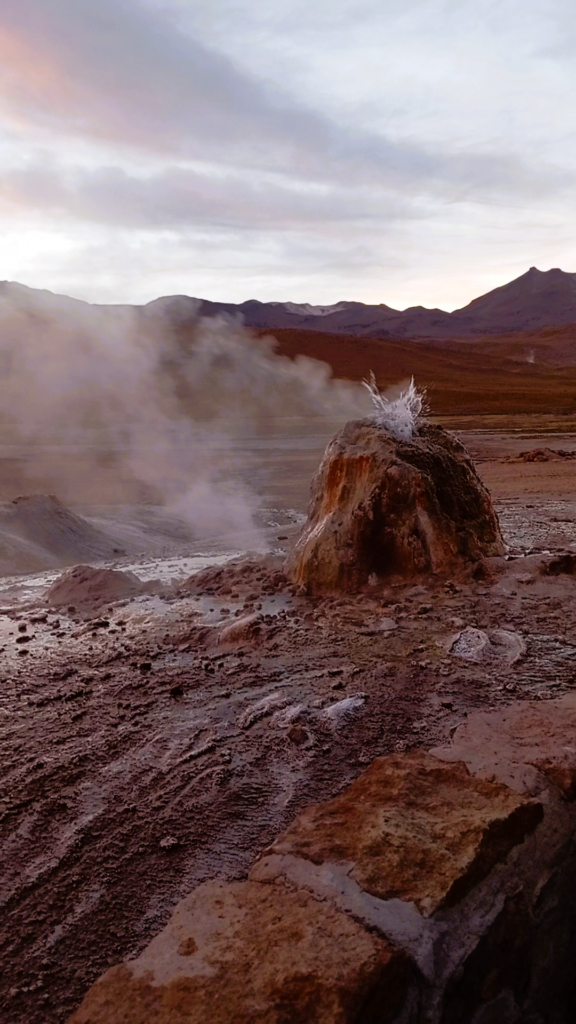
- Geysers: these are hot springs that periodically erupt, releasing water and steam through a system of underground conduits. An eruption occurs when pressure and temperature within the system reach conditions that cause the sudden expulsion of water. On average, Tatio’s geysers do not exceed one metre in height, unlike those in Yellowstone, which can reach more than 50 m, for example. The tallest geyser at Tatio reaches 5 m.
- Eruptive springs: features in which water is expelled or sprayed at the surface, but without necessarily exhibiting the periodic behaviour and underground conduit system characteristic of a true geyser.
- Perpetual spouters: springs that continuously or almost continuously produce jets and splashes of water, without the typical eruption-and-pause cycle of geysers.
- Fumaroles: openings through which mainly steam and gases from the geothermal system escape, with little or no liquid water.
- Hot springs and hot pools: areas where hot water reaches the surface and accumulates without producing actual eruptions.
- Mud pools: depressions where water, gases and fine sediment form a muddy mixture, often characterised by bubbling activity and constant small movements on the surface.
- Sinter cones, rims and terraces: mineral structures built up over time through the deposition of silica contained in geothermal waters. When hot water reaches the surface and cools, silica precipitates and accumulates around the springs, progressively forming rims, cones and broad terraces. Interestingly, Tatio has one of the highest known rates of silica precipitation in the world. In addition to being rich in silica, these deposits also contain other minerals such as gypsum, halite and calcium carbonate. The formation and morphology of these structures are also influenced by the interaction between geothermal fluids and the microorganisms living in the environment: the shape of the cones, in particular, can vary depending on temperature, water flow and microbial activity.
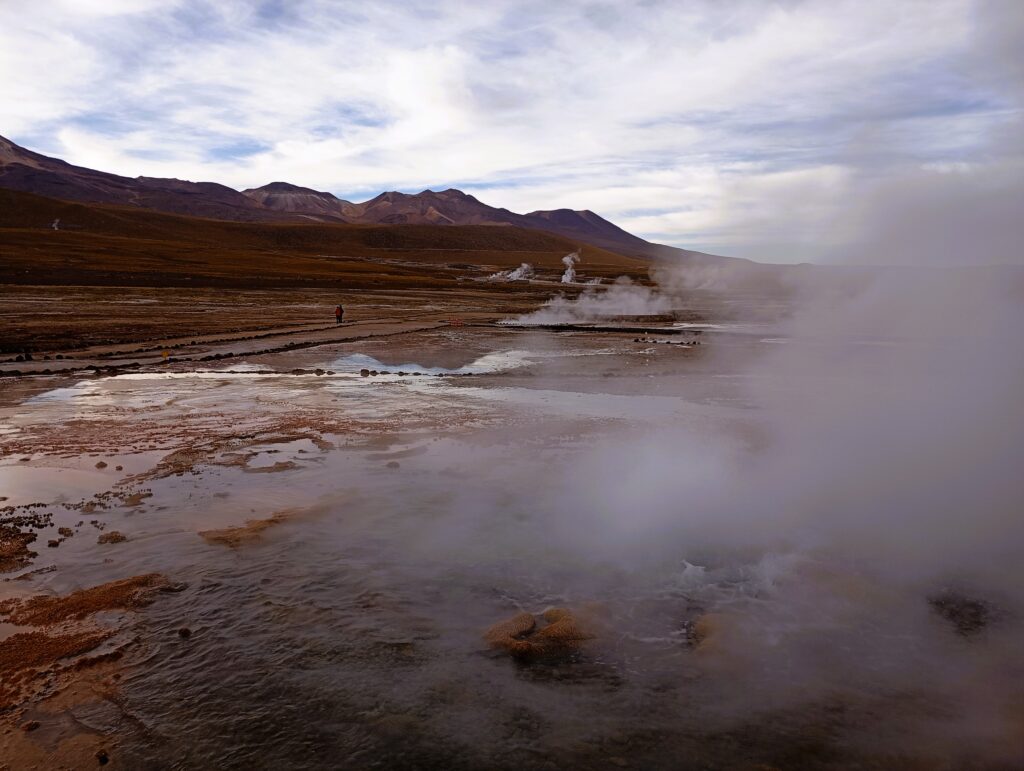
This is where Tatio becomes particularly interesting from a biological perspective as well. At over 4.000 metres above sea level, in an environment characterised by extreme aridity, intense ultraviolet radiation, strong winds, low atmospheric pressure, large temperature fluctuations, and very hot, mineral-rich waters, microorganisms adapted to conditions that would be prohibitive for most organisms are able to survive. These communities include different types of extremophilic microorganisms and are one of the most studied aspects of Tatio, partly because environments like this are used as terrestrial analogues to investigate possible forms of life in extreme environments on early Earth and Mars.
How to visit the Tatio Geysers
Entrance and opening hours
The Tatio Geysers geothermal field is located within a protected area and access is regulated. The park is open daily from 6:00 am to 4:00 pm, and admission costs CLP 15,000 for all visitors aged 8 and over. Those visiting the field independently can purchase their ticket directly at the park entrance, paying by card.
Due to Tatio’s particular environmental conditions, including its high altitude, low temperatures, and the presence of geothermal and sulphurous vapours, access is not permitted for children under 8 years of age or pregnant women. Visiting the site is also not recommended for people over 70 years of age or those with cardiovascular conditions or high blood pressure.
Visiting options
The Tatio Geysers can be visited independently by car or as part of an organised tour from San Pedro de Atacama. The journey from San Pedro generally takes 1,5–2 hours, depending on road conditions, and involves an elevation gain of around 2.000 m.
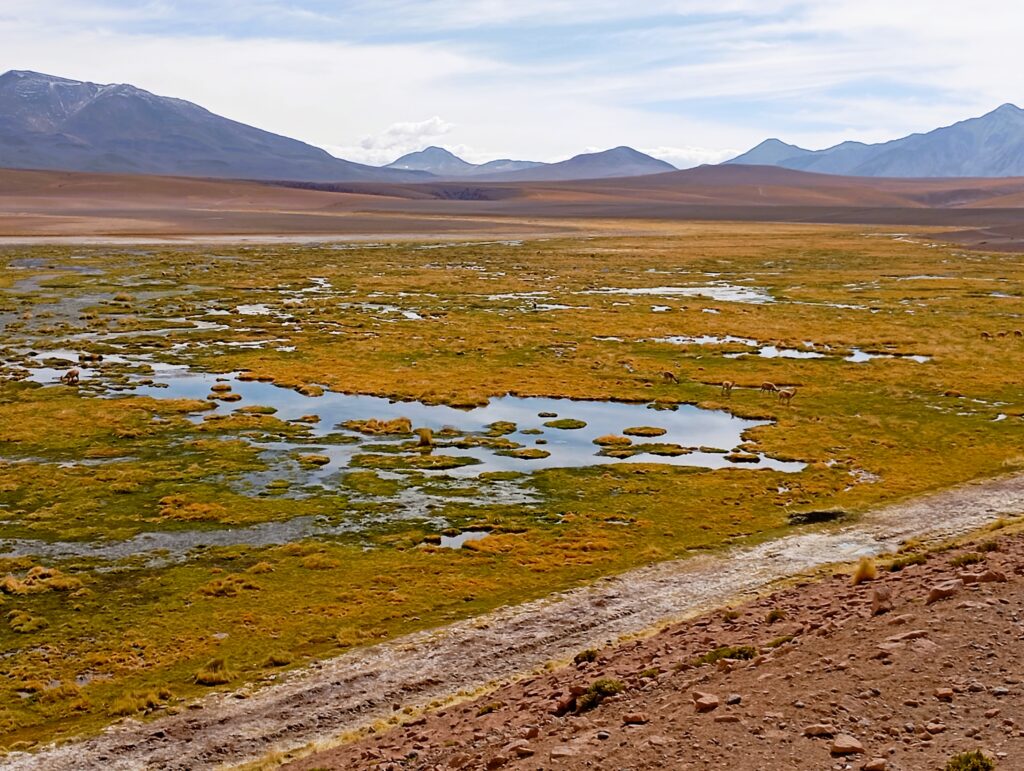
Organised tours usually spend around one and a half hours exploring the geothermal field, after which the tour continues with several stops along the way back. These include the Río Putana, where you can observe Altiplano flora and wildlife, the Machuca Lagoon, and the village of Machuca, a small settlement where you can try some local specialities, including llama skewers and goat cheese empanadas. Card payments are possible, but I still recommend carrying some cash. Tours generally return to San Pedro at around 11:30 am.
Those who choose to visit Tatio independently should allow at least one and a half hours to explore the geothermal field, in addition to the 1,5–2 hours of travel each way. The total time will then depend on any stops along the route and how much time you wish to spend in the different areas open to visitors.
Within the geothermal field, it is essential to follow the authorised trails and respect all safety guidelines. The pools and springs can reach extremely high temperatures, and approaching geothermal features outside the designated areas can be dangerous. There have been fatal accidents in the past. Toilets are available at the entrance and in the main area of the field, where there is also an old thermal water pool that is currently not open for use.
Why visit at sunrise?
Tours to the Tatio Geysers generally depart in the middle of the night, around 4:30–5:00 am, so they can reach the geothermal field in the early morning, shortly before sunrise. The reason is not that the geysers are only active at that time: scientific observations have documented geothermal activity throughout the entire day.
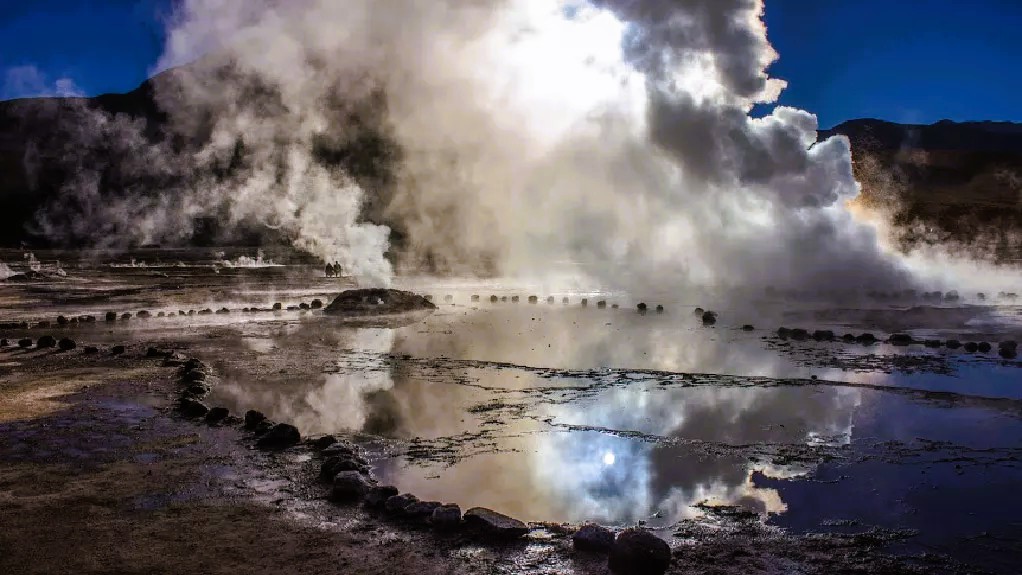
The distinctive feature of the early morning hours is mainly the visibility of the steam columns. Because of the very low air temperatures, the hot water and steam released by the geothermal features condense more rapidly, creating the large white columns that characterise the Tatio landscape. As the air warms throughout the morning, this effect gradually decreases and the steam becomes less visible.
Sunrise also offers particularly striking light conditions, making this time of day the most characteristic for visiting the geothermal field.
When to go and how to prepare
The Tatio Geysers can be visited all year round, but it is important to be prepared for high-altitude weather conditions. At around 4.300 metres above sea level, temperatures remain low even during the summer months: when you arrive at the geothermal field in the early morning, they are generally around 0 °C. In winter, temperatures can drop to as low as -15 to -20 °C at sunrise.
In winter, snowfall can lead to the temporary closure of the park when road conditions make it unsafe to reach. Snow is not, however, exclusively a winter phenomenon: during summer, when precipitation increases, it can still snow at these elevations.
For this reason, it is important to dress in layers, wearing warm clothing, gloves and a hat, with the option of removing layers that are no longer needed on the way back as temperatures rise. Water, sunglasses and sunscreen are also essential, as UV radiation is particularly intense at this altitude.
Altitude also calls for a few precautions to reduce the risk of altitude sickness. The evening before, it is advisable to avoid alcohol and have a light dinner, avoiding particularly heavy foods such as red meat or fried food. Breakfast can also be problematic for some people: since the journey starts very early and quickly reaches 4.300 metres, eating before departure may contribute to nausea and discomfort. For this reason, organised tours generally serve breakfast after visiting the geothermal field.
Eating is not allowed inside the park, so if you think you might need something during the morning, you can bring a snack to eat in the parking area upon arrival, before starting your visit. Those travelling independently can organise their morning more freely and have breakfast once they arrive.
For those who want to take additional precautions against altitude sickness, coca leaves, herbal infusions and drinks made with coca or chachacoma are readily available in San Pedro and have traditionally been used by Andean communities to cope with high altitude. In any case, it is important to stay well hydrated and pay attention to how you are feeling physically. There is also a first-aid station at the park entrance if needed.
Finally, smoking and the use of drones are not permitted inside the park. It is therefore worth keeping this in mind before starting your visit.
My tips
Personally, considering the distance and high altitude, I recommend choosing an organised tour. The road also has numerous bends and, during winter, icy conditions can occur, making the drive more challenging.
If you choose to reach Tatio in your own vehicle and want to avoid the busiest hours, you can arrive after 9:00 am, when most tours have already started their journey back. In this case, the geothermal field will be much quieter, but keep in mind that as the morning progresses, the steam columns gradually become less visible, so the visual experience will be different from that of the early morning hours.
Another question I am often asked is whether it is worth visiting Tatio if you have already seen, or are planning to visit, the Sol de Mañana geothermal field in Bolivia. My answer is yes: although both are high-altitude geothermal fields, the two experiences are different enough that they do not simply feel like a repetition. Tatio is particularly interesting for the sheer concentration and variety of its geothermal features, while Sol de Mañana has a significantly smaller number of them.
Finally, do not underestimate the altitude and the possibility of altitude sickness. I have personally never experienced it, but many people may experience headaches, nausea and vomiting during the visit. It is therefore important to arrive well acclimatised: if you are coming from sea level or low-altitude areas, it is preferable to spend at least 3 days in San Pedro de Atacama before visiting Tatio, while the timing may be different for those arriving from other high-altitude areas. It is also important to follow the recommendations provided in this guide, particularly regarding food, hydration and rest.